Checklists · Article revision V1
Purchasing acceptance of M12 fully threaded rods: length, thread, straightness and protection
- Document number
- WOHE-GUIDE-04
- Edition
- 2026-10
- Document status
- Reference guide
- Verified on
- 2026-10-16
This article is a purchasing and quality-management reference. The company forms cited are document examples, not quality certificates for specific batches. They do not constitute certification or a claim that every operation is performed on Wohe-owned equipment. Actual acceptance is governed by the order, applicable standards, approved drawings and confirmed inspection documents.
At a glance
Using M12×1000 process documents, Wohe Fasteners explains how to confirm fully threaded rod length, thread, straightness, surface treatment and packaging protection so buyers can define acceptance conditions.
Guidance & practice
When purchasing M12 fully threaded rods, confirming diameter and length alone does not define every delivery condition. Pitch, tolerance, property class, surface treatment, straightness and packaging protection should also be agreed according to drawings and intended use.
Using M12×1000 fully threaded rod process documentation, Hebei Wohe Fastener Manufacturing Co., Ltd. explains the items that need separate confirmation during purchasing and acceptance.
First define product requirements and the applicable standards
GB/T 15389-2025 is titled “Fasteners — Threaded rods.” Buyers can use this standard together with the specific product details to establish applicable requirements. National standard information
“M12×1000” provides size information, but further confirmation is still required:
| Item | Information to define |
|---|---|
| Length | Finished length and permissible deviation |
| Thread | Pitch, tolerance and applicable inspection requirements |
| Mechanical properties | Property class and acceptance documentation |
| Straightness | Limit, measurement datum and method |
| Surface treatment | Type, relevant properties and post-treatment fit requirements |
| Ends and packaging | End condition, protection and transport requirements |
The name “fully threaded rod” alone does not establish its material, property class or load-bearing capability in service.
Distinguish cut length from finished length
Wohe's M12×1000 documents list cutting, end processing, thread rolling and subsequent treatment separately.
This structure highlights that cut length is a process parameter, while finished length is a delivery requirement. Identify them separately and inspect them against confirmed technical documents.
During purchasing acceptance, make sure the measurement concerns the product in its final delivery condition. Cutting records alone should not be used to assess finished length.
Define the product condition for thread inspection
Thread acceptance should not rely solely on fitting a single nut. Use the appropriate gauges and inspection methods required by the applicable documents, and specify the condition in which inspection takes place.
Wohe's threaded rod process documents include a requirement to reinspect threads after coating. For purchasing discussions, this raises a specific question: after surface treatment, how is conformity of the delivered product to the agreed thread requirements confirmed?
Gauge specifications, methods of use and assessment rules should be defined in the applicable inspection documents. “GO goes, NOT GO stops” alone is not a complete operating instruction.
Agree both the straightness method and the limit
Expressions such as “straight rod” or “no obvious bending” are descriptive and difficult to use directly as quantitative acceptance criteria.
Where quantitative inspection is needed, define the measurement condition, support arrangement, measuring positions, tools and assessment requirements in advance. This helps avoid buyers and suppliers obtaining non-comparable results through different methods.
Visual detection of obvious bending may be one inspection item, but cannot replace agreed quantitative measurement.
Protection and labels are also part of delivery verification
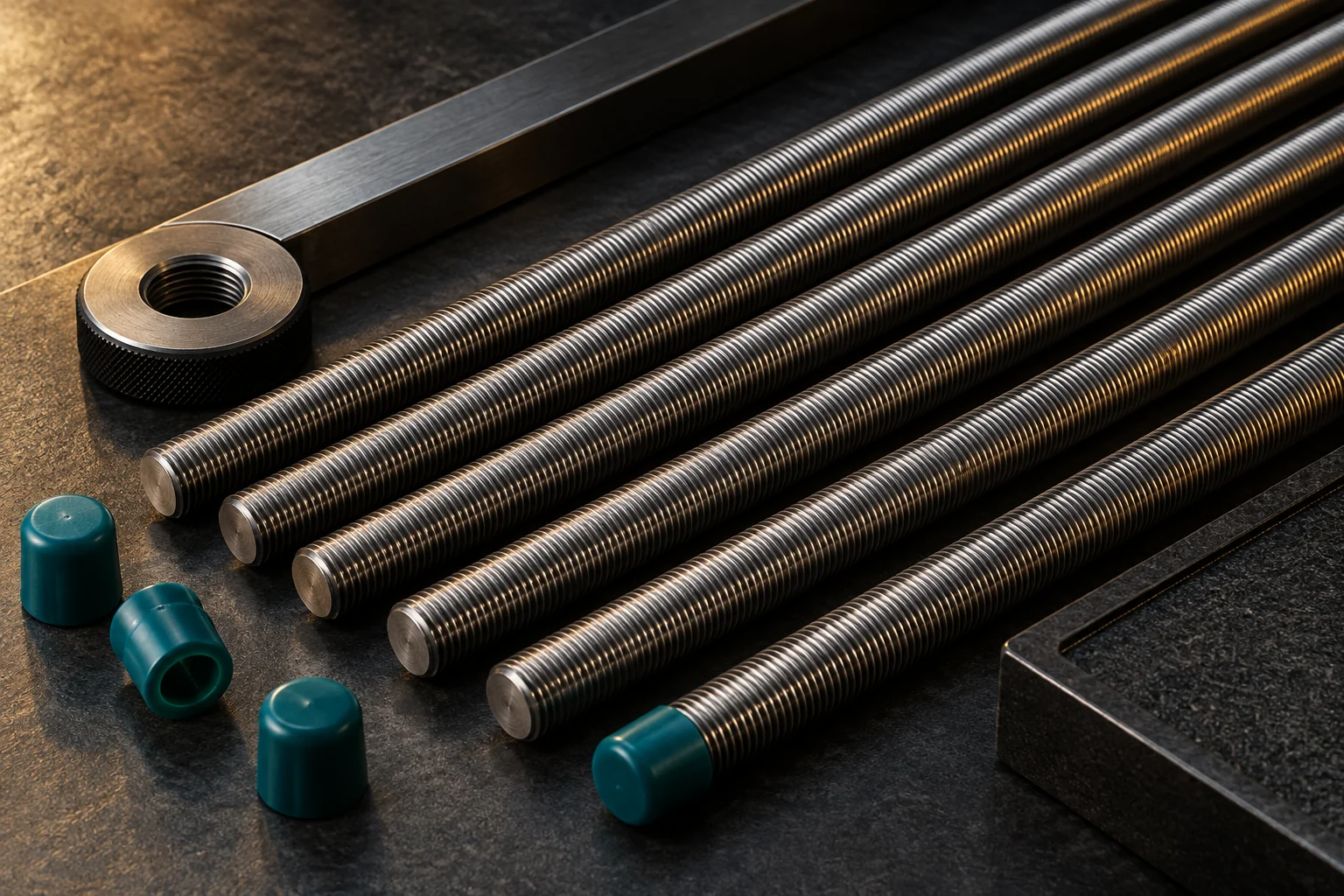
During transport of fully threaded rods, pay attention to thread ends, contact areas under strapping and corrosion-protective packaging. Wohe's documents list end protection, bundled packaging and traceability labels among the management items.
On receipt, check quantities, packaging condition, appearance and labels, then perform the agreed dimensional and property acceptance checks. If damage is found, retain photographs, packaging and batch information to support review.
In Wohe's view, purchasing threaded rods requires confirming technical requirements, acceptance methods and transport protection together. Clear conditions provide consistent criteria for verifying the delivered products.
Scope and limitations
This article is a purchasing and quality-management reference. The company forms cited are document examples, not quality certificates for specific batches. They do not constitute certification or a claim that every operation is performed on Wohe-owned equipment. Actual acceptance is governed by the order, applicable standards, approved drawings and confirmed inspection documents.
Evidence and sources
Based on the site owner’s supplied manuscript and the company-form examples it describes. Original forms were not independently verified, and no on-site verification was performed. WOHE-GUIDE is this article’s reference-document identifier, not a national standard number.
The official link is a national-standard catalogue information page. Only metadata such as the number, title, status and dates were checked; the full standard text was not reviewed. This does not mean that original forms or the full standard are available for download here.
Source document ↗https://openstd.samr.gov.cn/bzgk/std/newGbInfo?hcno=9BCF46045B7BD685438C100EE1DEA384Article revision V1
Initial publication based on the owner-supplied manuscript; AI-assisted translation and illustration.
You are reading the published revision. Later drafts are reviewed before they replace this page.