Product Specifications
| Material | Carbon Steel |
Product Introduction
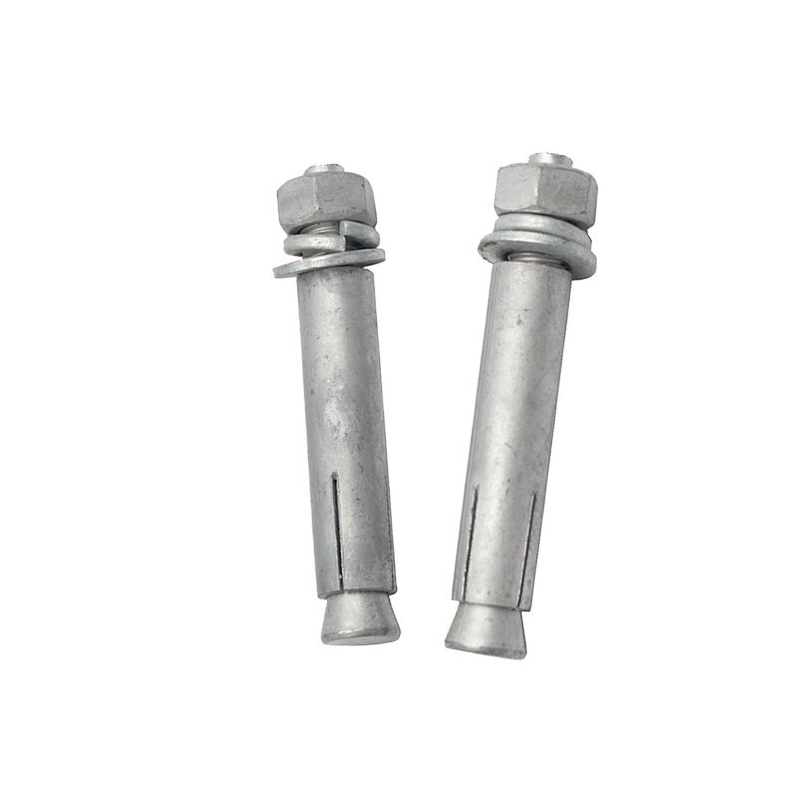
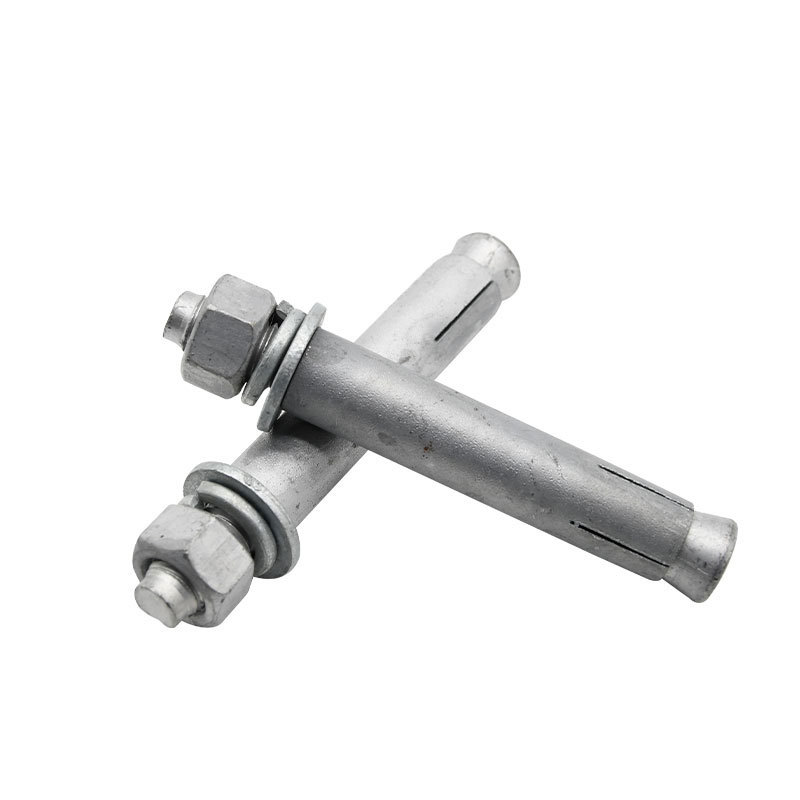
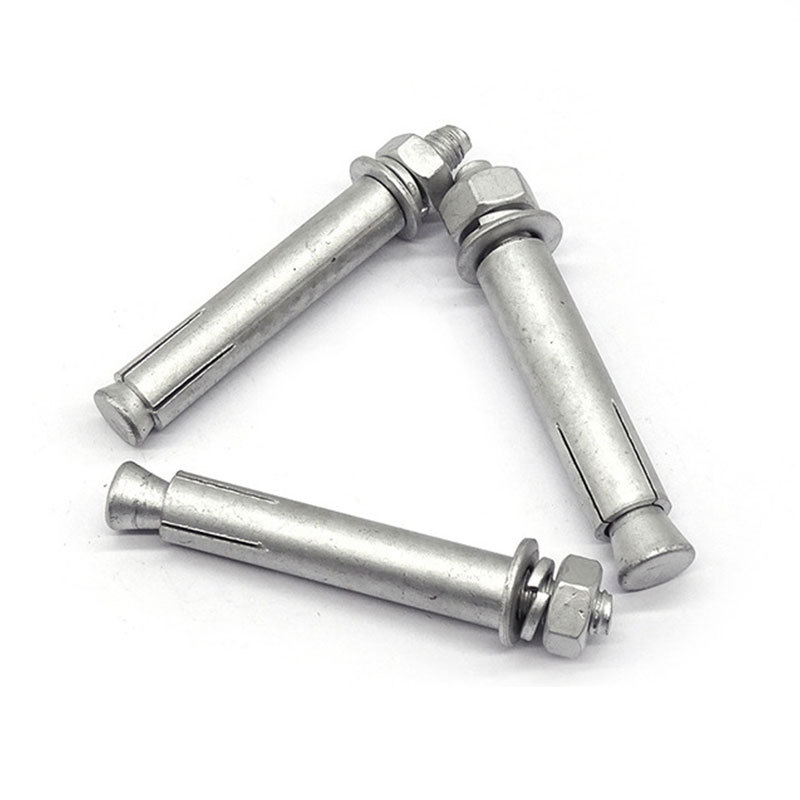
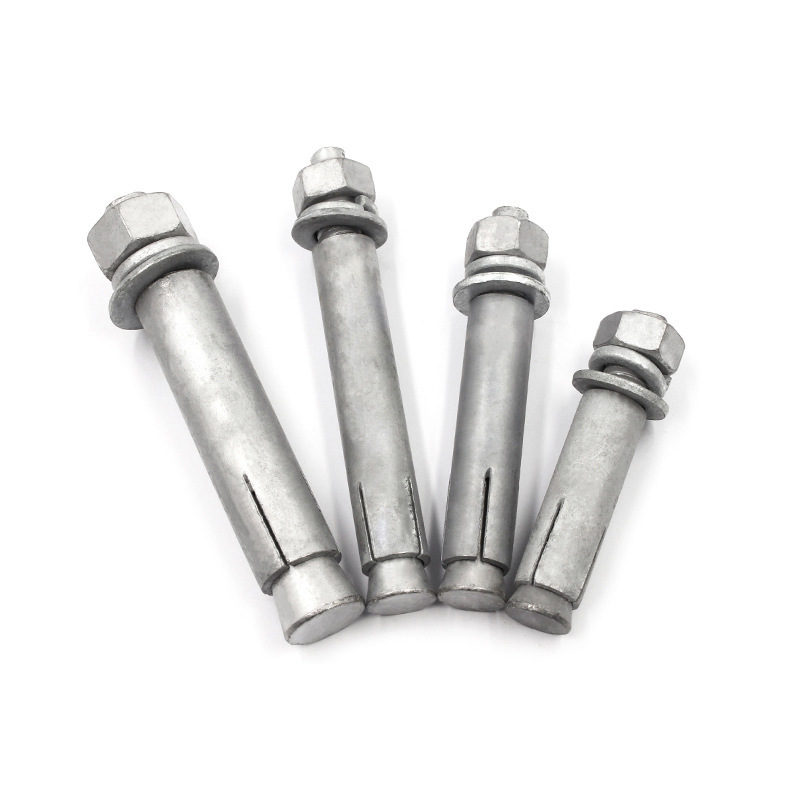
An expansion bolt generally consists of a countersunk bolt, an expansion sleeve, a flat washer, a spring washer, and a hex nut. During installation, a hole is first drilled in the base material. The bolt and expansion sleeve are then inserted into the hole. When the nut is tightened, the bolt is pulled outward, and the tapered large end at its tail expands the metal sleeve, causing it to wedge tightly against the hole wall and thereby achieving fixation. The product is mainly manufactured according to standards such as GB/T 22795. The common property class is 4.8, the main material is carbon steel (such as Q235), and the surface is usually zinc-plated for rust prevention.
⚙️ I. Product Features
Wedge expansion principle: It uses the taper at the tail of the bolt in combination with the expansion sleeve. Tightening the nut causes the sleeve to expand radially and generate a strong friction gripping force against the hole wall.
Complete specification system: Common thread specifications cover M6 to M20, and different specifications correspond to different drill hole sizes and load-bearing capacities.
Various materials and surface treatments: The core material is carbon steel, and stainless steel (such as 304/A2) can also be selected. Surface treatment is mainly zinc plating (blue-white zinc, color zinc), providing basic rust prevention.
Complete set for direct installation: Products are supplied as complete sets (including bolt, expansion sleeve, nut, and washers). After drilling on site, they can be directly inserted and tightened without complex tools.
✅ II. Product Advantages
Strong anchoring force and reliable load bearing: It can provide relatively high tensile and shear bearing capacity in hard base materials such as concrete. For example, an M10 specification in C15 concrete can achieve an ideal static load of up to 320 kg.
Convenient installation and efficient construction: Fixation can be completed in three steps: drill, insert, and tighten. The operation is simple and suitable for rapid on-site installation.
Wide range of applicable base materials: It can be used in concrete, solid brick, natural stone, and other base materials. By selecting different types of expansion sleeves (such as three-piece/four-piece types), it can adapt to walls of different hardness.
Cost-effective and highly versatile: The structure is simple and the production process is mature, making it a highly cost-effective choice for large-volume light-to-medium-duty anchoring operations.
?️ III. Scope of Application
Buildings and decoration: Fixing doors and windows, guardrails, awnings, curtain wall keels, advertising signs, and various decorative components.
Mechanical, electrical, and pipeline installation: Fixing outdoor air-conditioning units, pipe supports, cable trays, cable troughs, fire-fighting equipment, and water and electrical facilities.
General equipment fixation: Fixing small and medium-sized mechanical equipment, shelves, supports, etc., on concrete walls or floors.
Light and medium load scenarios: Suitable for conventional fixation occasions that require anchoring strength but are not extreme heavy loads or strong dynamic loads.