Product Specifications
| Material | Carbon Steel |
Product Introduction
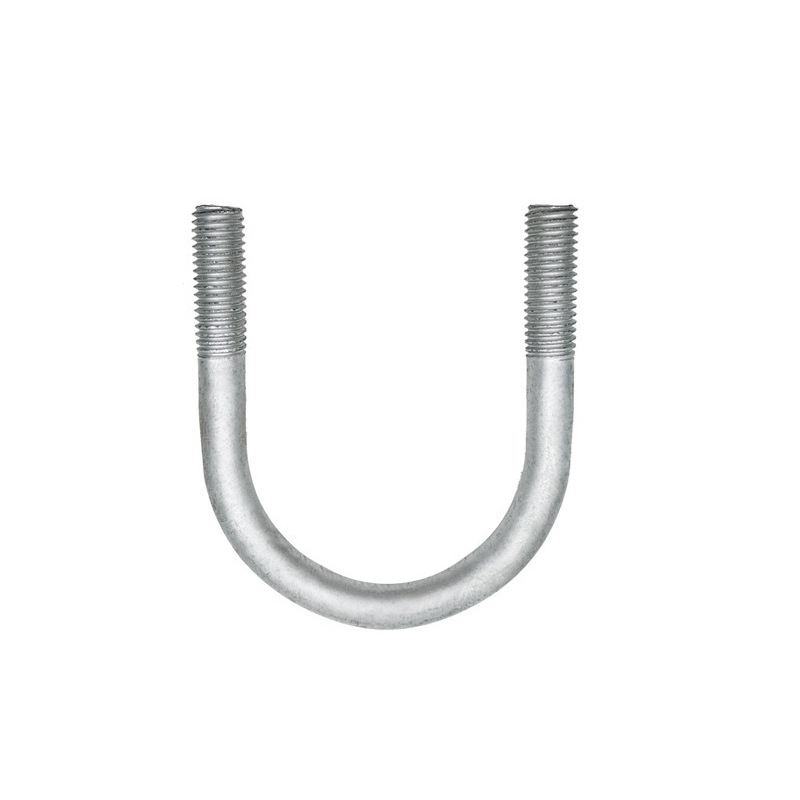
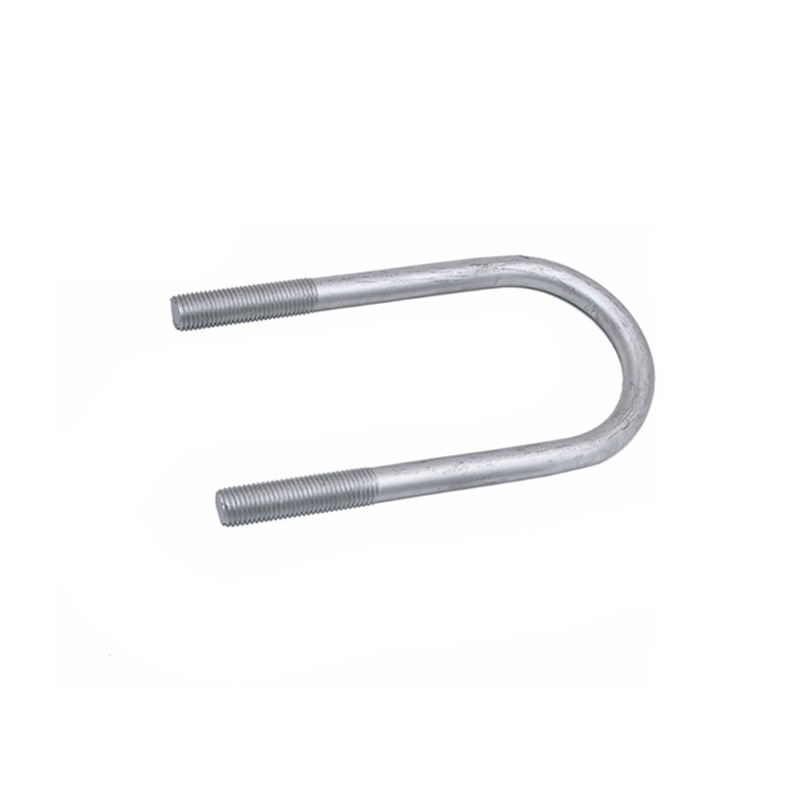
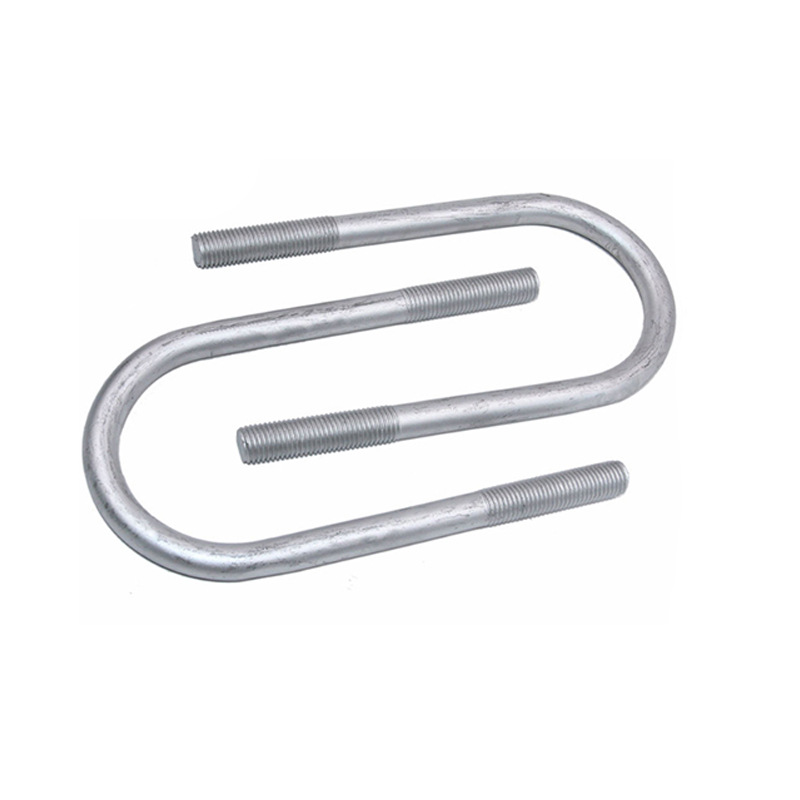
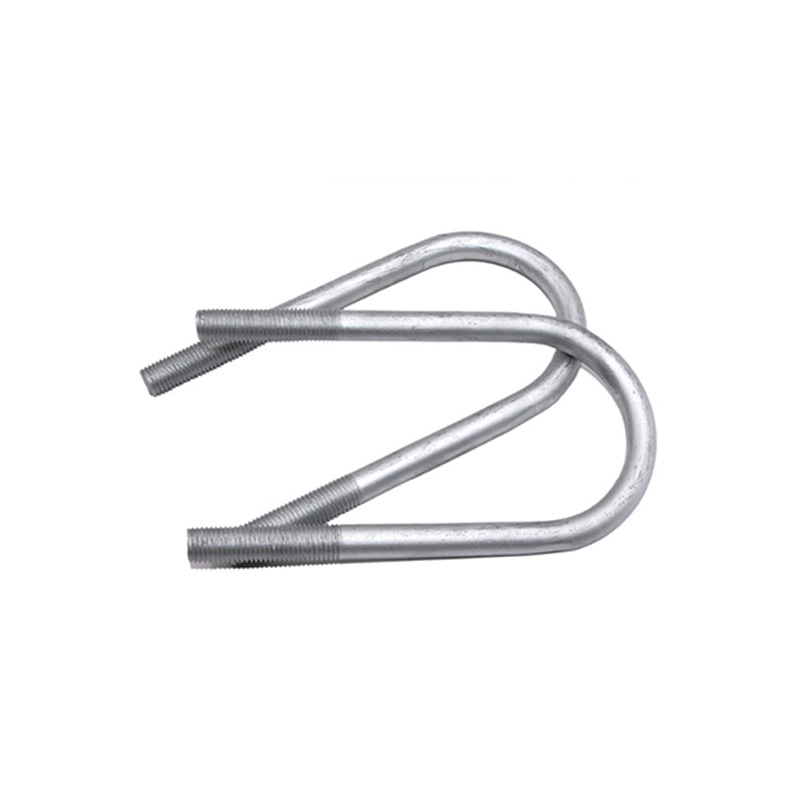
The hot-dip galvanized U-bolt (commonly called U-bolt, U-clamp, saddle bolt, etc.) is a U-shaped fastener with threads at both ends. By matching it with nuts and washers, it locks pipes, plates, and other fixed objects onto supports or structures. Its core anti-corrosion process is hot-dip galvanizing: the pre-treated steel U-bolt is immersed in molten zinc at about 450°C, forming a zinc-iron alloy layer and a pure zinc layer on the surface. This zinc layer is metallurgically bonded to the steel substrate, adheres firmly, and is not easy to peel off. The commonly used material is Q235 carbon steel, with strength grade commonly 4.8; for high-demand applications, higher strength grades such as 8.8 can also be selected. Standards include GB/T 798, JB/ZQ 4321, etc.
⚙️ I. Product Features
Metallurgical bonding of zinc layer for durable anti-corrosion: The hot-dip galvanized layer forms a metallurgical bond with the steel substrate. Even dead corners such as thread roots and the inner side of bends can be completely covered, and the anti-corrosion life is far longer than electro-galvanizing.
Thick zinc layer provides long-term protection: The hot-dip galvanized layer thickness usually reaches 45–85 μm, and the protection life in outdoor atmospheric environments can exceed 20 years, effectively resisting rain, snow, ultraviolet rays, and industrial atmosphere erosion.
Flexible specifications and shapes: Thread specifications commonly range from M6 to M36, and lengths can be customized according to pipe diameter and installation requirements. In addition to the standard semicircular shape, there are also square right-angle, triangular, and other shapes to suit fixed objects of different cross-sections.
Optional strength grades: Grade 4.8 is commonly used; for structures with higher load-bearing requirements, higher strength grades such as 8.8 can be selected, matching different working conditions through material and heat treatment.
Mature material and process: Q235 carbon steel is the main material, and Q345B, alloy steel, or stainless steel can also be selected as needed. The manufacturing process includes thread rolling, heating and forming, and other steps, with stable quality.
✅ II. Product Advantages
Dual anti-corrosion mechanism: The thick zinc layer acts as a physical barrier isolating moisture and oxygen; when the coating is locally damaged, zinc, being more chemically active than iron, corrodes preferentially (sacrificial anode protection), thereby protecting the internal steel substrate from rusting.
Long-term outdoor weather resistance and low maintenance cost: In outdoor, humid, or industrial environments, the protection life of hot-dip galvanized U-bolts is significantly longer than that of ordinary galvanized parts, greatly reducing later maintenance and replacement frequency.
Convenient installation with complete matching accessories: Usually supplied with nuts and washers. After passing through the support hole on site, they can be fixed by tightening in stages in diagonal order, with simple operation.
Strong versatility and adaptability to multiple scenarios: The U-shaped structure can firmly clamp pipes, plates, section steel, and components of various cross-sectional shapes, with mature applications in construction, vehicles, ships, power, and other fields.
?️ III. Scope of Application
Pipe fixing and installation: Fixing of water supply and drainage pipes, industrial pipes, HVAC pipes, etc. on supports, walls, or ceilings—the most typical use of U-bolts.
Photovoltaic mounting systems: Used to connect photovoltaic purlins, supports, and structural components. Outdoor long-term exposure scenarios especially rely on their hot-dip galvanized anti-corrosion capability.
Vehicle and ship manufacturing: Fastening and connection of truck cargo boxes, automobile leaf springs, ship piping systems, etc.
Buildings and steel structures: Fixing and reinforcement of steel structure connections, bridges, tunnels, and railway auxiliary facilities.
Power and communication facilities: Fixing of accessories for utility poles, communication towers, cable trays, etc. Outdoor environments have relatively high anti-corrosion requirements.