Product Specifications
| Material | Carbon Steel |
Product Introduction
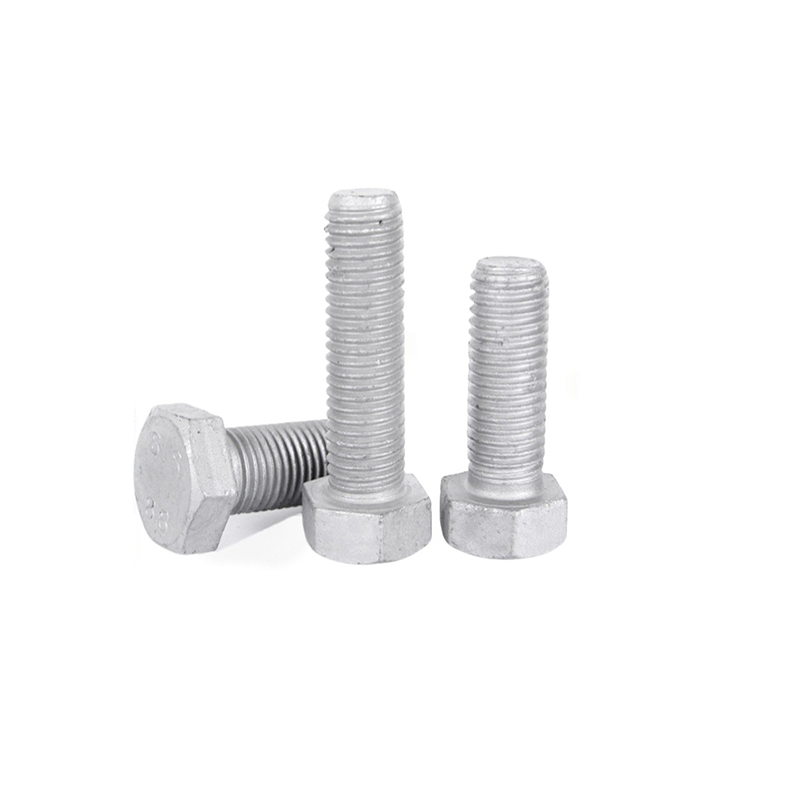
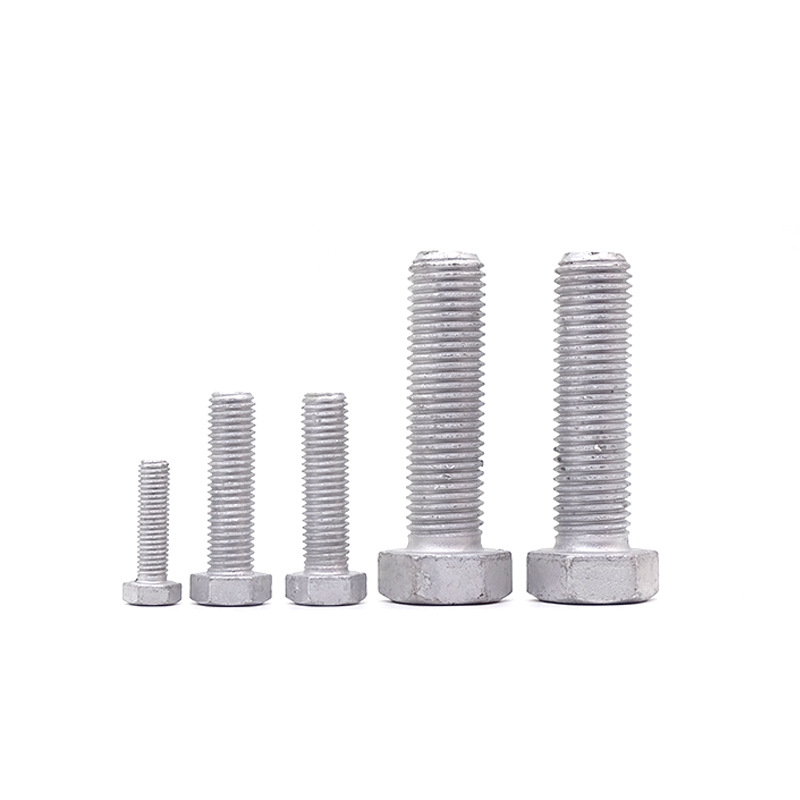
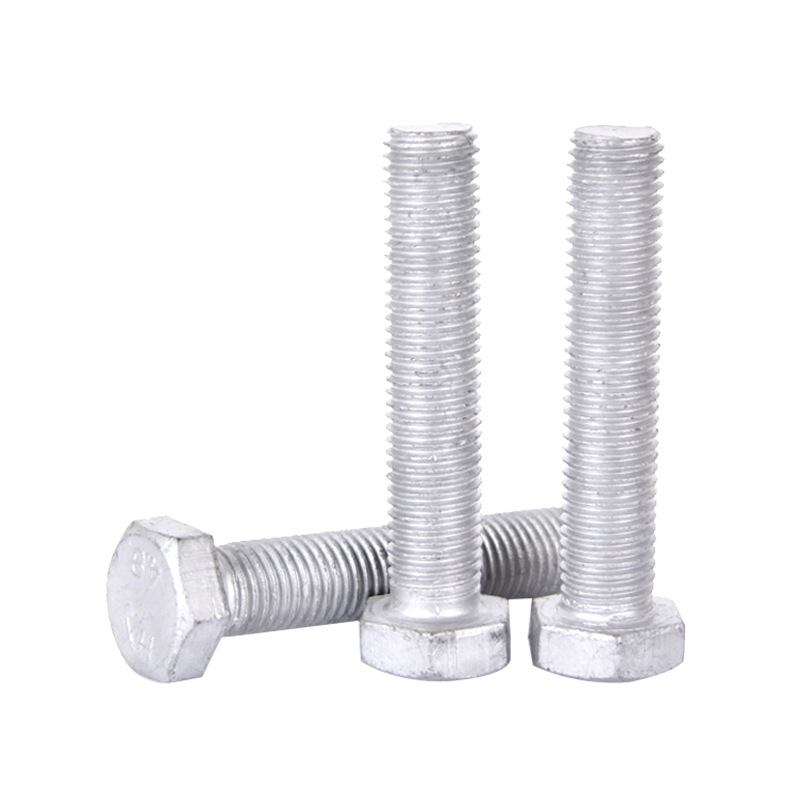
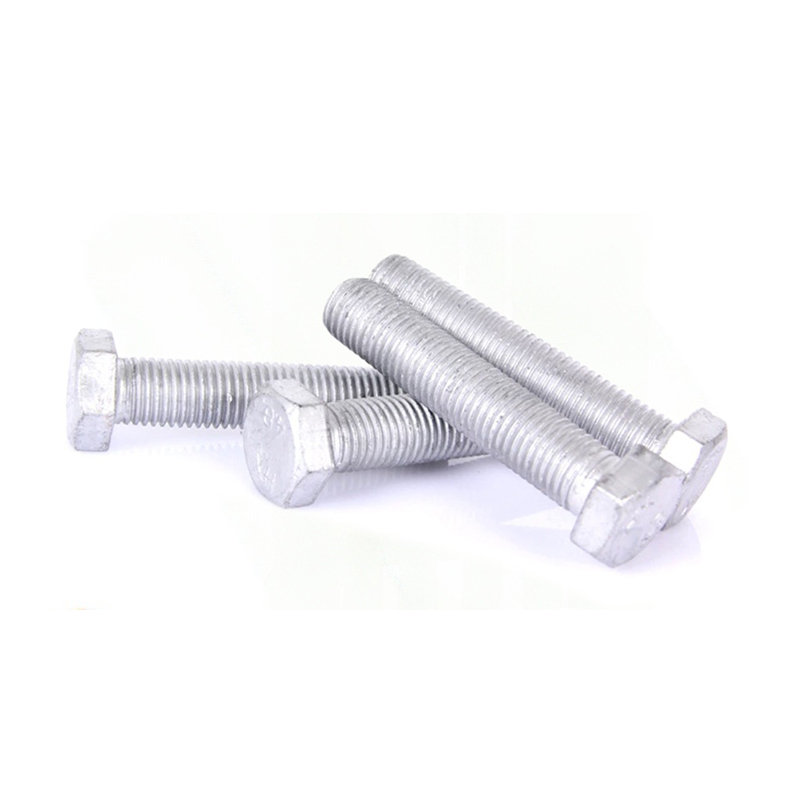
The hot-dip galvanized hex head bolt is a fastener with a regular hexagonal head, a threaded shank, and a hot-dip galvanized finish over the entire body. It combines the versatile drive of standard hex head bolts with the heavy-duty corrosion protection of a hot-dip galvanized coating. Core standards include GB/T 5782 (partially threaded) and GB/T 5783 (fully threaded), and it can also correspond to international standards such as DIN 931/933. Common property classes are 4.8 (Q235) and 8.8 (35#/45#); for high-demand applications, 10.9 (35CrMo/40Cr) can also be supplied. During manufacturing, the entire bolt is immersed in molten zinc at about 500°C, forming a zinc-iron alloy layer and a pure zinc layer on the surface. The zinc coating thickness is usually 50–100 μm, far thicker than electro-galvanizing, and it is designed specifically for long-term reliable connections in outdoor, humid, and corrosive atmospheric environments.
I. Product Features
Metallurgical bonding for a durable coating: The hot-dip galvanized layer is metallurgically bonded to the steel substrate and becomes part of the steel surface rather than a simple physical attachment. Therefore, the coating is not easy to peel off during transportation, installation, and long-term service, and its durability is far superior to electroplating or brush-applied processes.
Full-surface coverage with no dead corners: The bolt is immersed entirely in molten zinc, so even the thread roots, fillets under the head, recessed areas of the shank, and sharp corners are completely covered by the zinc layer, with no missed coating risks common in electroplating.
Complete standards and specifications: Covers GB/T 5782 (partially threaded) and GB/T 5783 (fully threaded), with strength grades from 4.8 to 10.9 and common size ranges from M3 to M36 (some manufacturers can supply up to M100). Length coverage is wide, meeting various needs from light connections to heavy-load structures.
Attention to matching high strength with thick zinc coating: Class 8.8 is a common matching grade for hot-dip galvanized hex head bolts; for Class 10.9 and above, attention must be paid to the potential effect of the high temperature of hot-dip galvanizing on tempering stability, and Class 12.9 is generally not recommended for hot-dip galvanizing. The tolerance design of mating threads must reserve allowance for the zinc layer to ensure smooth screwing.
II. Product Advantages
Dual anti-corrosion mechanism: The thick zinc layer acts as a physical barrier isolating moisture and oxygen, and through sacrificial anode action, it preferentially corrodes when the coating is locally damaged, protecting the steel substrate. This is the core principle of long-term outdoor corrosion protection for hot-dip galvanized bolts.
Long-term outdoor weather resistance and low maintenance cost: In a general atmospheric environment, the protective life of the hot-dip galvanized layer is far longer than that of electro-galvanizing. In outdoor, industrial, or coastal corrosive environments, it can significantly extend the maintenance cycle and reduce the anti-corrosion coating and replacement costs over the whole life cycle.
Convenient installation with no on-site painting: Hot-dip galvanized bolts arrive as finished, corrosion-protected products. After installation, there is usually no need to apply anti-rust paint on site as with ordinary carbon steel parts, saving a construction step.
Strong versatility of the external hex drive: The hex head fits standard wrenches, sockets, or box-end wrenches, making force application convenient and allowing high tightening torque. It offers the best tool compatibility in steel structures, power, and general machinery assembly.
III. Scope of Application
Building steel structures and bridges: Connections for industrial plant steel structures, large-span space structures, bridge steel members, and curtain wall supports—one of the most core application fields of hot-dip galvanized hex head bolts.
Power and communication infrastructure: Connections for transmission towers, substation frameworks, communication towers, and power fittings. Long-term exposure to the atmosphere relies on the hot-dip galvanized layer for maintenance-free corrosion protection.
New energy projects: Outdoor fastening of photovoltaic mounting systems and auxiliary steel structures of wind turbine towers. Especially in coastal, high-humidity, or industrially polluted areas, hot-dip galvanizing is an economical and reliable anti-corrosion solution.
Transportation and municipal facilities: Installation and fixing of highway guardrails, railway auxiliary facilities, municipal pipeline supports, and large outdoor equipment.
General industry and outdoor machinery: Various mechanical connections for construction machinery, mining equipment, shipbuilding, and outdoor long-term service, balancing strength and weather resistance.