Product Specifications
| Material | Aluminum Alloy |
Product Introduction
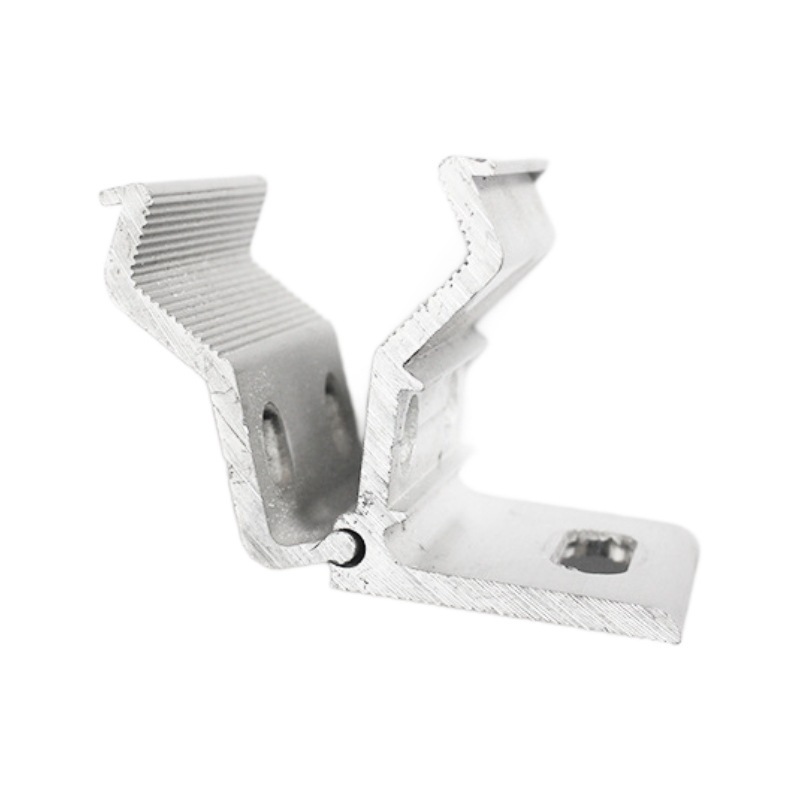
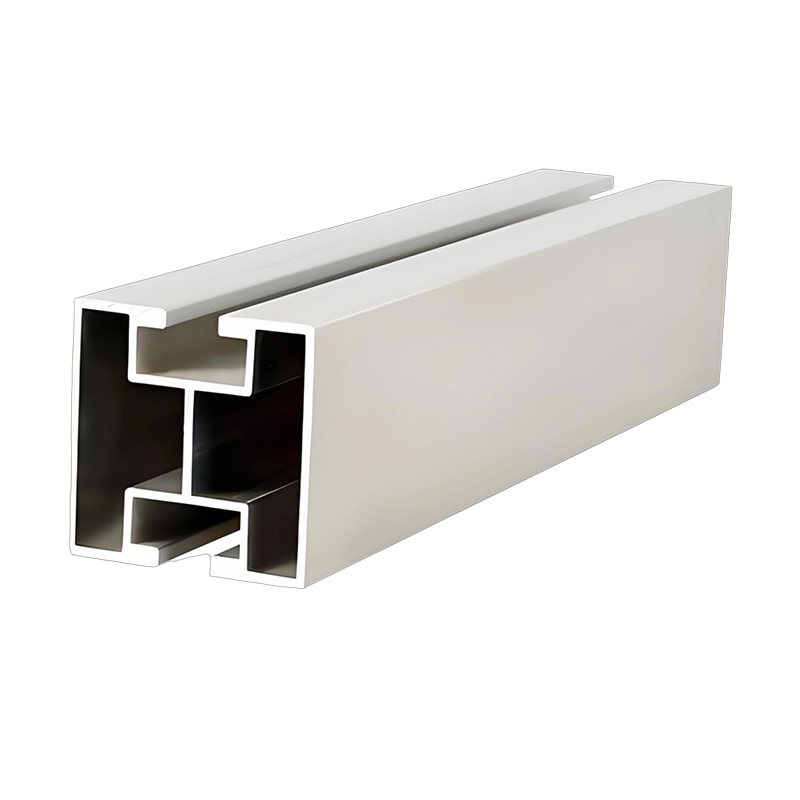
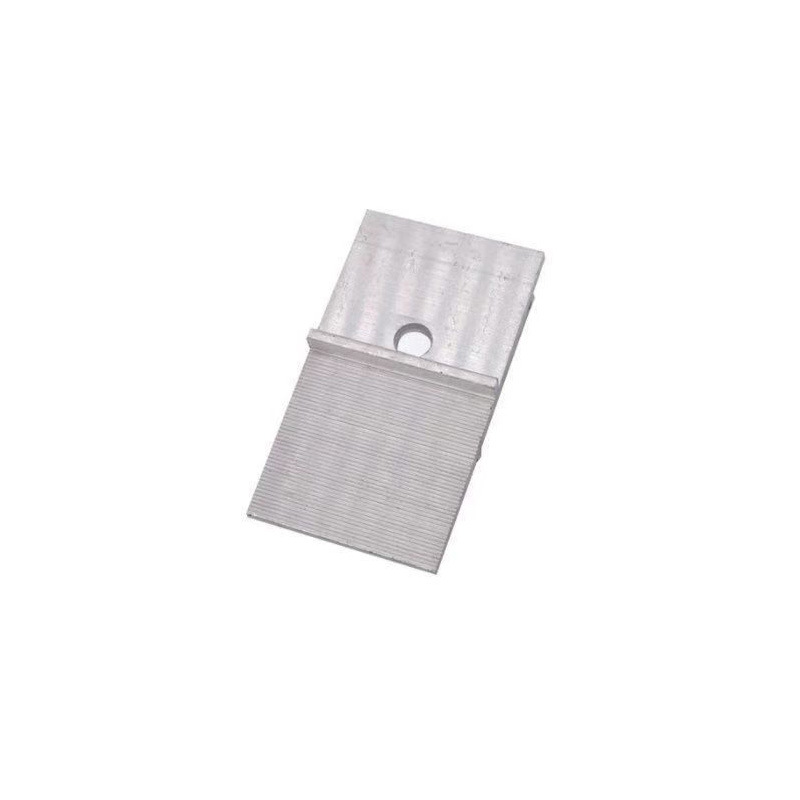
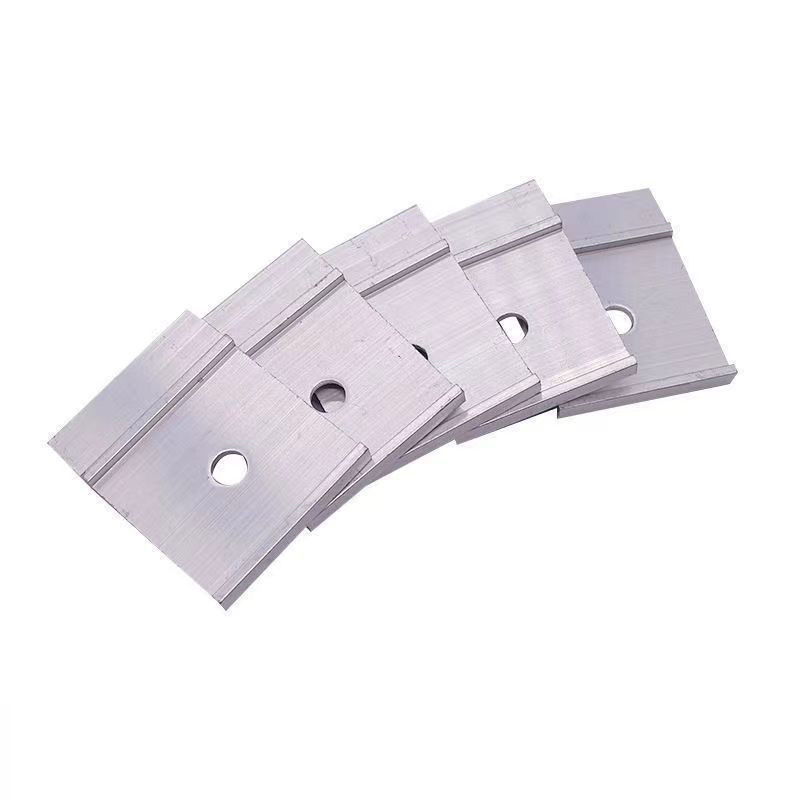
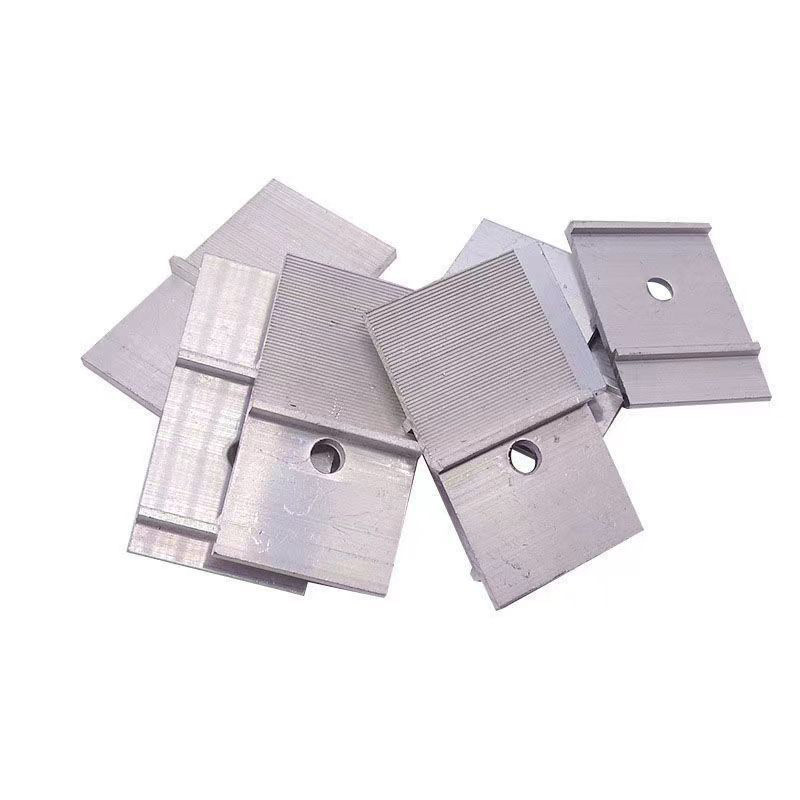
The PV edge support (also called edge support block, edge support plate, or aluminum alloy edge support) is a vertical supporting component installed at the side edge of a PV array or at the end of a rail. It is often used together with an edge clamp, but their functional dimensions differ: the edge clamp is responsible for horizontal locking and resisting wind uplift, while the edge support is responsible for vertical bearing, resisting gravity and profile deformation, and providing an additional vertical support point for the cantilevered end of the rail or the array edge. The edge support itself does not directly press the module; instead, by supporting the rail or module edge, it prevents end sagging or warping, thereby enhancing the stability of the entire edge structure. Its mainstream material is 6063-T5 or 6061-T6 aluminum alloy with an anodized surface. Being the same material as the aluminum rail, it completely eliminates galvanic corrosion.
I. Product Features
Vertical bearing and positioning, complementary to the edge clamp: The core function of the edge support is vertical end support. It is installed at both ends of each rail or below the cantilevered end to provide an additional support point and prevent the rail end from sagging or warping under excessive load. The edge clamp is responsible for horizontal locking. The two are parallel in function and cannot replace each other.
L-shaped and U-shaped structures: The L-shaped vertical edge support has a 90° angle; one side is fixed to the main structure, and the other side presses upward against the lower edge or side of the rail, providing vertical support force. It is the most commonly used type. The U-shaped/slotted edge support is fixed at the bottom, and its two side walls wrap around and clamp the rail web, providing lateral restraint in addition to vertical support and restricting lateral sway of the rail.
Aluminum alloy material, lightweight, strong, and corrosion-resistant: It uses 6063-T5 or 6061-T6 aluminum alloy, meeting support strength requirements while being lightweight. The surface is anodized (film thickness usually ≥15 μm), offering good weather resistance. Being the same material as the aluminum rail, there is no risk of galvanic corrosion.
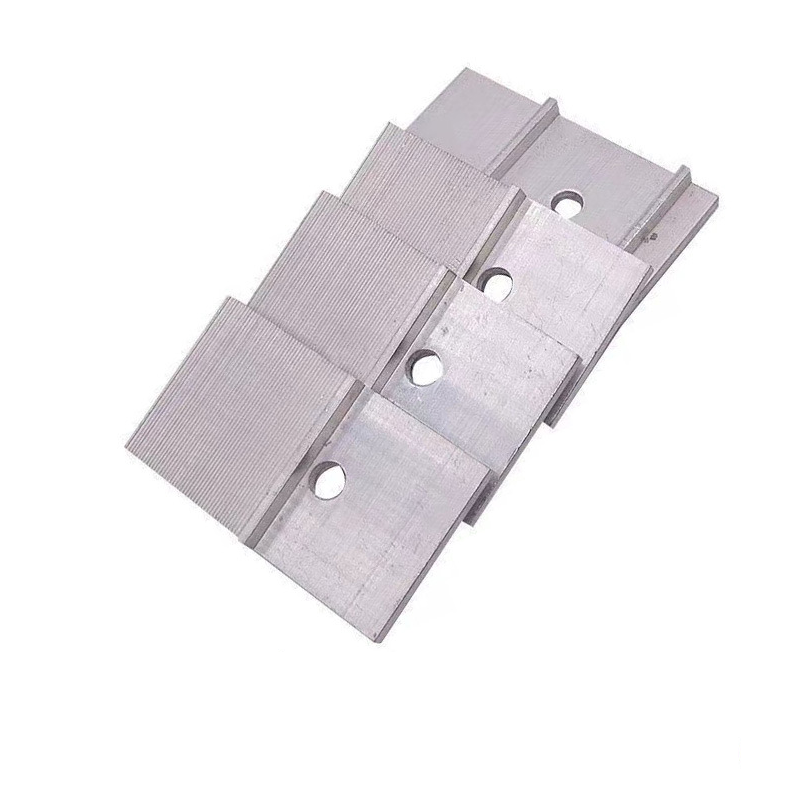
Toothed contact surface (some products): Some support plate products have a toothed texture on the contact surface to increase surface adhesion and improve slip resistance after installation.
Clear installation position: It must be installed directly below or immediately adjacent to the rail end support point to ensure tight contact with the bottom or side of the rail and truly perform the supporting function. No gap should be left.
II. Product Advantages
Solves rail end deflection problems: When the rail cantilever length exceeds the supplier's recommended value, or when the array is located in an area with high wind pressure or high snow load, the edge support can provide critical vertical support at the end, significantly reducing the risk of rail end sagging or warping and ensuring module installation flatness and long-term structural safety.
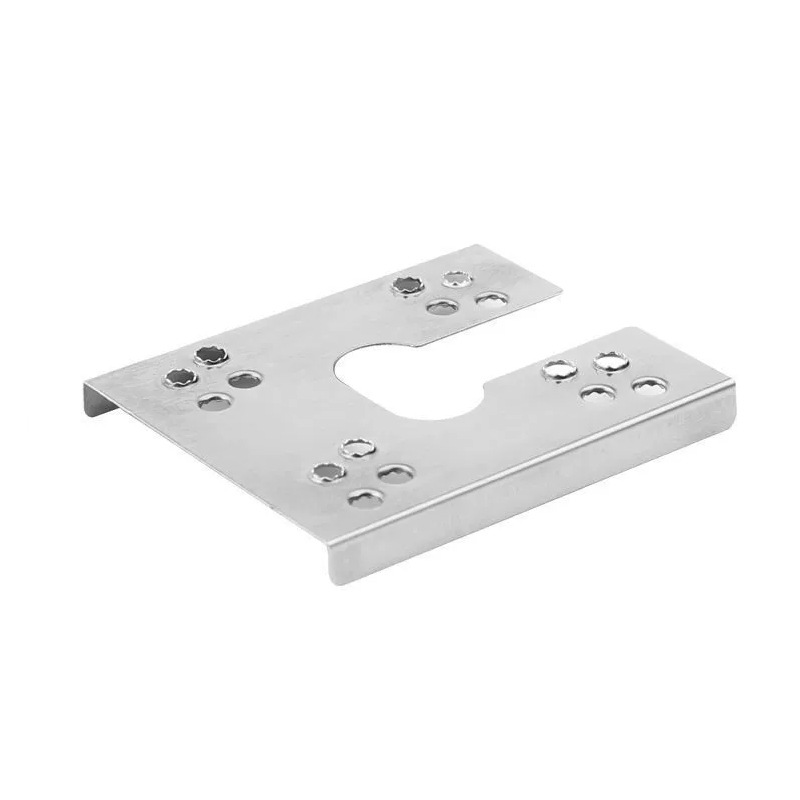
Optimizes purlin usage and reduces system cost: Proper use of support plate accessories can transfer module loads more evenly to the rail, thereby reducing the number of purlins required. For example, a 2×10 array that originally required 4 purlins can be reduced to 3 after using support plate accessories, directly lowering the material cost of the mounting structure.
Perfect compatibility with aluminum rail systems, maintenance-free: The same aluminum alloy material plus anodizing eliminates the hidden risk of galvanic corrosion when steel parts contact aluminum rails. The anti-corrosion life matches the 25-year design cycle of a PV plant, providing long-term maintenance-free operation.
Flexible installation and convenient O&M: The bolted support plate solution is more flexible than direct welding or drilling. When later adjustment, removal, or relocation is needed, loosening the fasteners is sufficient without damaging the main structure.
Enhances the overall edge restraint system: Working together with the edge clamp, horizontal locking and vertical bearing form a complete closed loop, significantly improving the restraint stiffness of the array edge. This is especially suitable for projects with high wind pressure, high snow load, or large cantilevers.
III. Scope of Application
Reinforcement of rail cantilevered ends: In ground-mounted plants or rooftop projects, the cantilevered section of the rail extending beyond the last support point is prone to end sagging, and an edge support needs to be added to provide a vertical support point.
High wind pressure and high snow load areas: In coastal typhoon areas, windy Gobi areas, or heavy-snow areas in the north, the array edge loads are relatively large. The combination of edge supports and edge clamps can enhance the edge's deformation resistance.
Occasions with insufficient rail support at the array edge: When the edge clamp cannot be used at the edge of the module layout, resulting in weak support at the rail end, the edge support is used as a supplementary support node.
Commercial, industrial, and residential distributed rooftops: Edge finishing and rail end fixing for PV systems on color steel tile roofs and flat roofs.
BIPV and waterproof mounting systems: Used with waterproof rails to provide vertical support for edge rails and coordinate with waterproof nodes.
Scenarios requiring lateral sway restraint: Choose U-shaped/slotted edge supports to restrict lateral sway of the rail in addition to vertical support.