Product Specifications
| Material | Aluminum Alloy |
Product Introduction
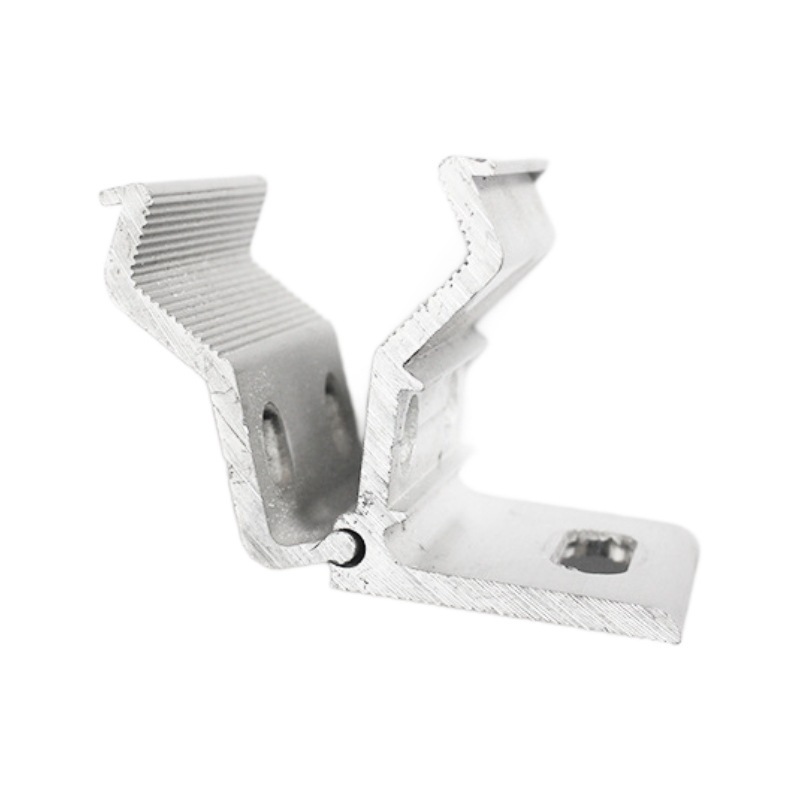
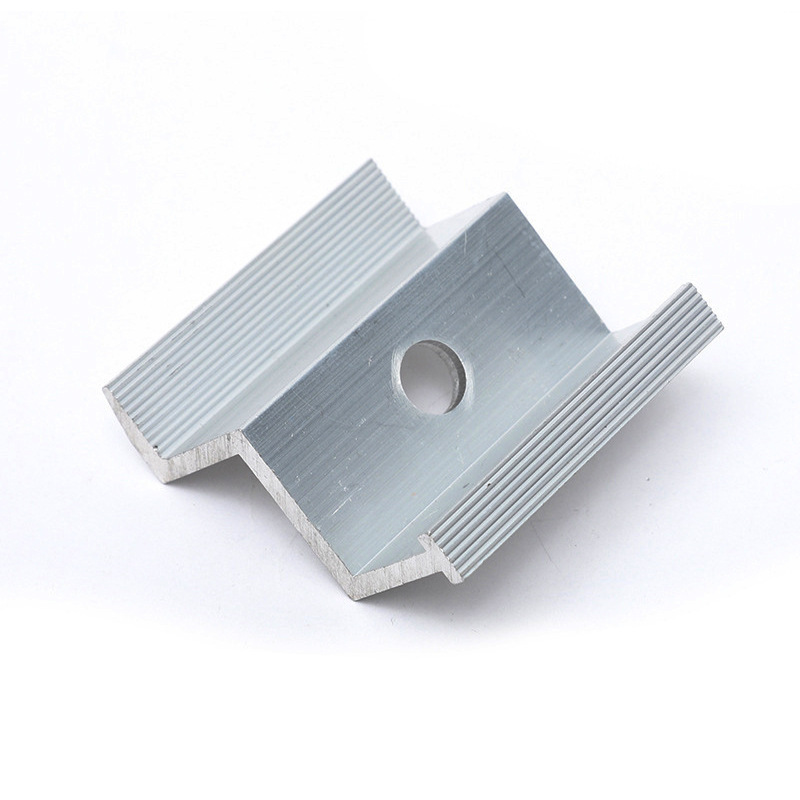
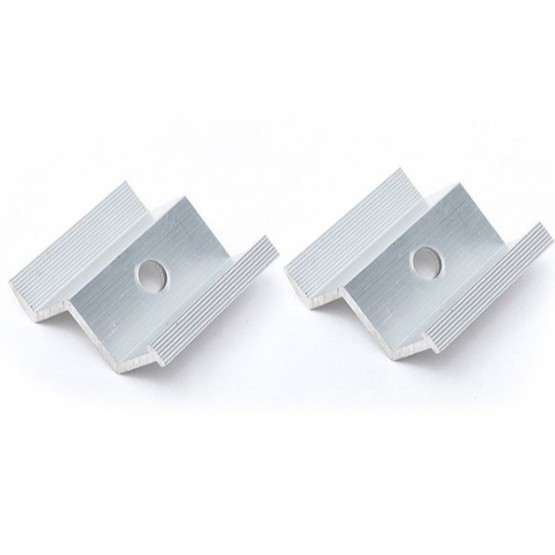
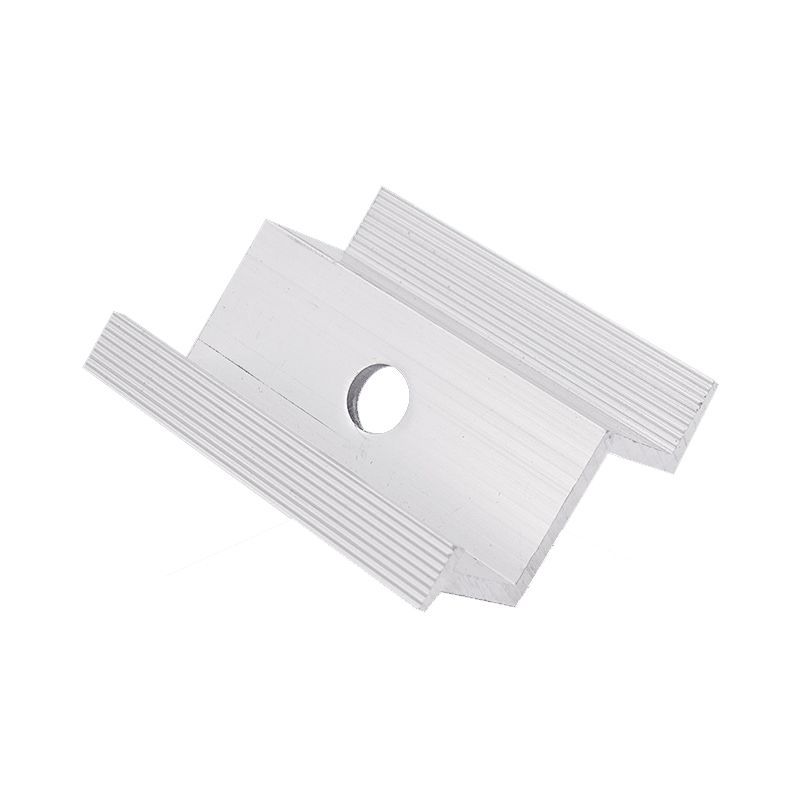
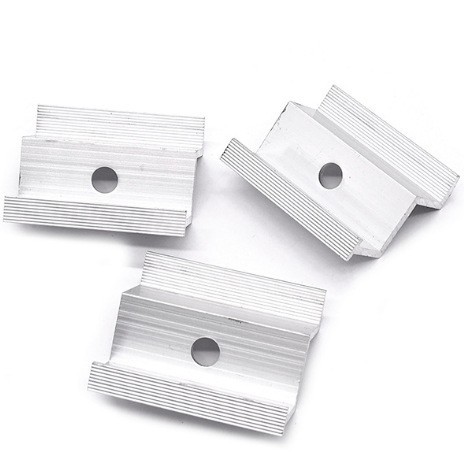
The edge clamp is a connector specifically used in photovoltaic mounting systems to secure the outer module frames at the edges of an array. Unlike the mid clamp, which straddles the middle between two modules, the edge clamp adopts a single-sided L-shaped cantilever structure and clamps only the outer frame of a single module. Its core function is to firmly lock the modules at the first and last ends onto the rail, preventing displacement or overturning under severe weather such as strong winds, while also ensuring the flatness and appearance of the edges of the entire module row. The material is usually 6063-T5 aluminum alloy with an anodized surface, providing excellent outdoor weather resistance.
I. Product Features
Single-sided clamping structure: L-shaped or with a single-sided clamping wing, it presses only the frame of one module and is specifically designed for the first and last ends of an array; it cannot be used for middle splicing between two modules.
Height strictly matched to frame: Mainstream module frame thicknesses include 30 mm, 35 mm, 40 mm, 45 mm, and 50 mm, and the height of the edge clamp must precisely correspond to the frame thickness. If the height does not match, it will not only damage the frame and cause microcracks but also leave gaps that allow the module to shake in the wind.
Thickness determines load-bearing capacity: When tightened, the edge clamp is in a cantilevered stress state and requires relatively high strength. High-quality products in the industry usually have an actual body thickness of 2.8–3.0 mm or more; high-wind-pressure or coastal projects may even require 3.0–4.0 mm. Some low-end products on the market have falsely labeled thickness.
Anti-slip and grounding design: The contact surface usually has anti-slip teeth to increase friction; some products have grounding spikes that pierce the oxide layer while pressing the frame to achieve electrical continuity, simplifying system grounding work.
Various length specifications: Common lengths are 40 mm, 50 mm, and 60 mm. Ordinary distributed rooftops mostly use 40 mm, while high-wind, coastal, or large-module projects often use 50–60 mm extended versions to increase the clamping area.
II. Product Advantages
The first line of defense against wind uplift at the edges: The wind load borne by the edges of a PV array is usually greater than that at the interior. As the core force-bearing point of the first and last modules, the thickness and clamping reliability of the edge clamp directly determine whether the entire row of modules will be blown over under strong winds.
Protects module frames and reduces microcrack risk: An edge clamp with matching height provides uniform contact pressure, avoiding extrusion deformation of the aluminum alloy frame caused by forced tightening, thereby protecting the cells inside the module from mechanical stress damage.
Convenient for later O&M and single-module removal: With the clamp fixing method, when an edge module needs repair or replacement, it can be operated simply by loosening the edge clamp, which is more flexible and convenient than direct bolt-through fixing.
Forms a complete closed loop with the mid clamp: The mid clamp handles internal interlocking, while the edge clamp handles edge finishing at the first and last ends; together they form a complete mechanical fastening network for the system.
Whole-life cost advantage: Aluminum alloy material plus anodizing treatment gives a corrosion protection life matching the 25-year design cycle of a PV plant, maintenance-free, and recyclable.
III. Scope of Application
Large ground-mounted PV plants: Fixing of edge modules at the first and last ends of arrays. Although the quantity is smaller than that of mid clamps, it is crucial for resisting edge wind pressure.
Commercial, industrial, and residential distributed rooftops: In PV systems on color steel tiles or flat roofs, used for fixing modules at the start and end of rows to ensure the safety of roof edges.
High-wind-pressure and coastal projects: In coastal typhoon areas and windy Gobi areas, extended and thickened edge clamps (50–60 mm long, actual thickness above 3.0 mm) should be selected, and high-strength grades (such as 6005-T6) should be preferred to withstand strong winds.
BIPV (building-integrated photovoltaics) systems: Used together with waterproof rails for pressing and fixing edge waterproof cover plates.
PV carports and tracking mounts: The edges of these structures are subject to complex forces, and the edge clamp needs sufficient rigidity to maintain the preloaded state under long-term vibration.