Product Specifications
| Material | Aluminum Alloy |
Product Introduction
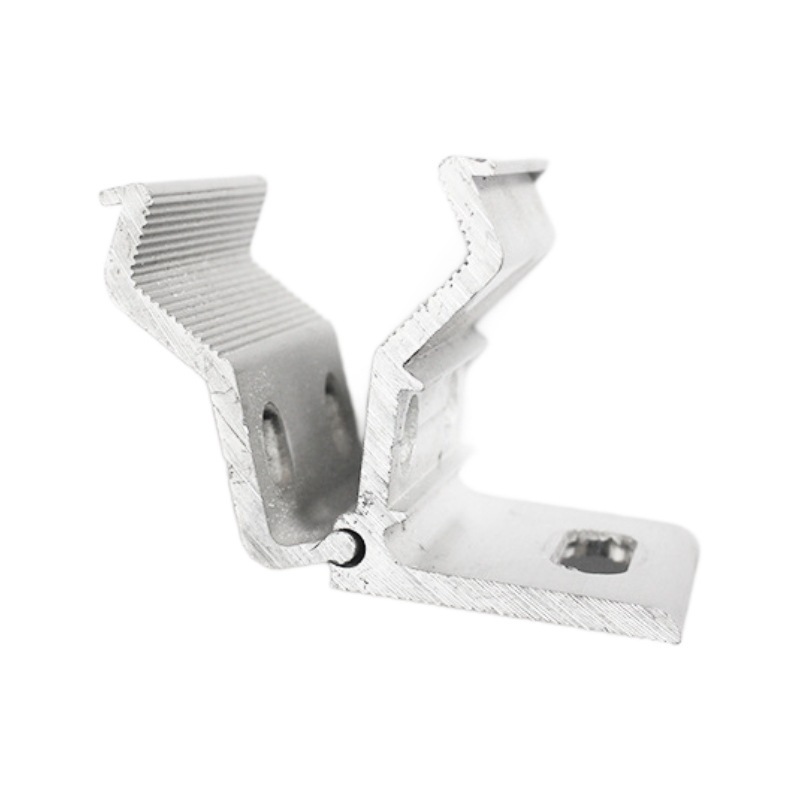
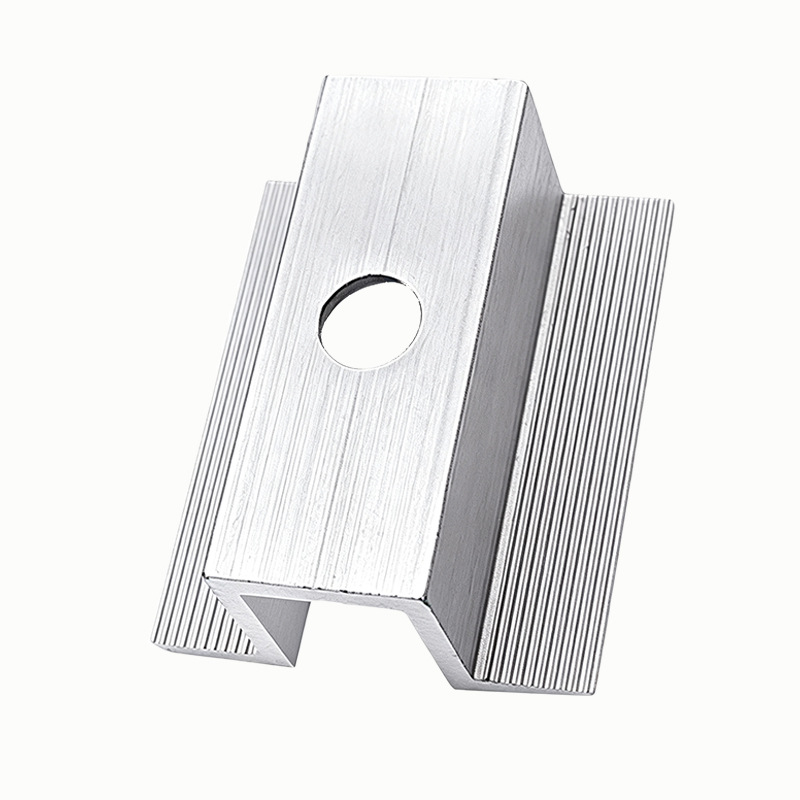
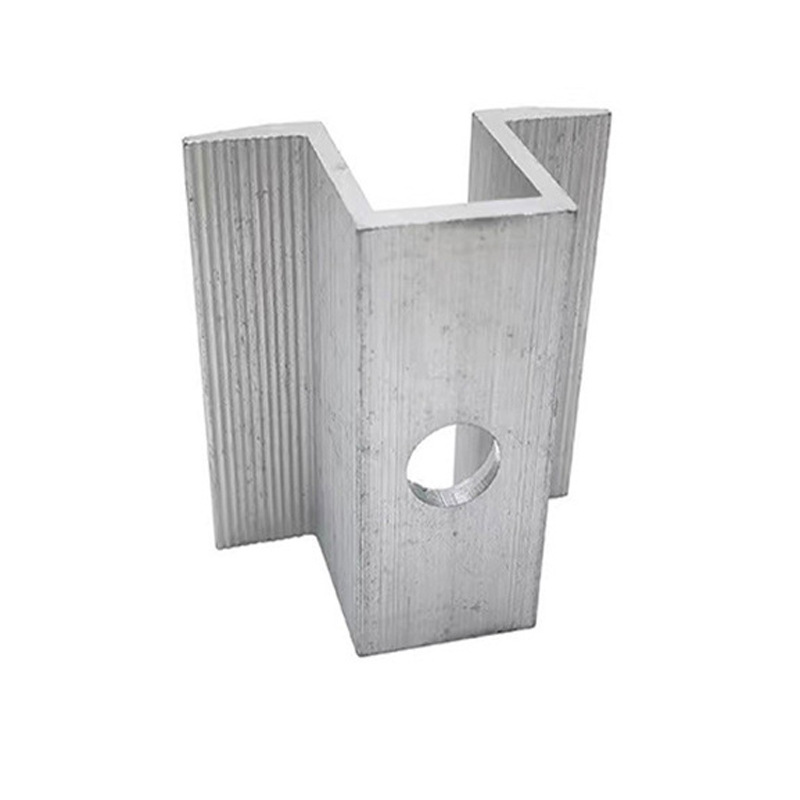
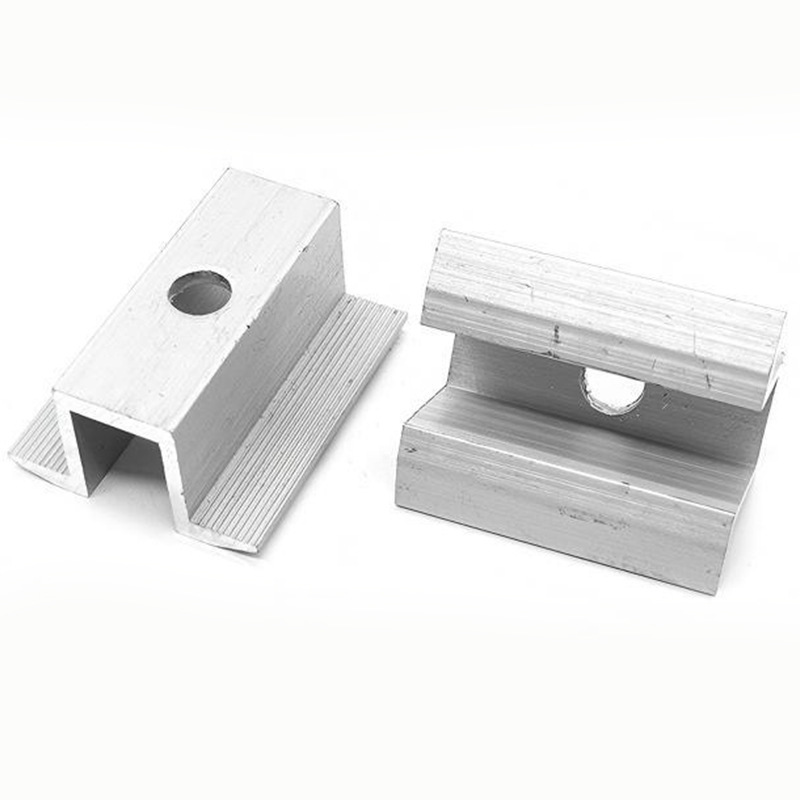
The mid clamp (also called the middle clamp or module mid clamp) is a core connector in photovoltaic mounting systems used to simultaneously clamp the frames of two adjacent PV modules. It complements the end clamp, which only clamps the outer frame of a single module. Its basic structure is a T-shaped or streamlined metal block with a central bolt hole and symmetrically extending clamping wings on both sides. It straddles the frames of two modules and, when tightened with a bolt, presses the modules firmly onto the rail. The mid clamp is the only mechanical locking node between modules inside a PV array and directly determines the connection stiffness and wind-uplift resistance of the entire row of modules.
I. Product Features
Symmetrical two-sided clamping structure: The mid clamp straddles the adjacent sides of two module frames, and both clamping wings press down simultaneously. One tightening action locks two modules, making it the standard solution for connections between modules inside an array.
Aluminum alloy as the main material: The mainstream material is 6063-T5 aluminum alloy, while some products use higher-strength grades such as 6005-T6. The surface is anodized (film thickness usually 8–10 μm), balancing outdoor corrosion resistance and appearance.
Anti-slip teeth/groove design: The clamping surface often has anti-slip teeth or grooves to increase mechanical interlocking with the module frame and improve resistance to sliding under wind load.
Height must match frame thickness: The clamping height of the mid clamp must correspond to the module frame thickness (commonly 30 mm, 35 mm, 40 mm, 45 mm, and 50 mm) to ensure the clamping wings fit closely against the frame and to avoid frame deformation or microcracks caused by forced tightening.
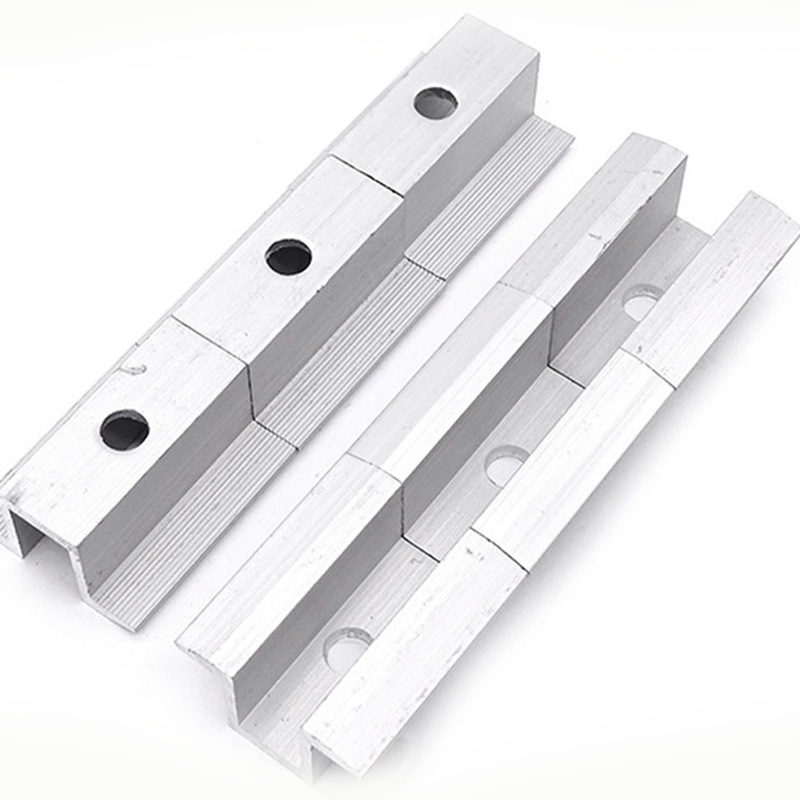
Optional lengths to suit wind pressure levels: Common lengths include 40 mm, 50 mm, 60 mm, and 80 mm. For high-wind-pressure or large-module applications, extended versions should be selected to increase the clamping area.
II. Product Advantages
Key node for wind-uplift resistance inside the array: The mid clamp firmly interlocks adjacent modules and evenly distributes stress generated by wind and snow loads, reducing the risk of microcracks and displacement caused by localized stress concentration on module frames. Proper use of mid clamps can meet wind resistance, tensile resistance, and deformation requirements.
Protects frames and reduces the probability of microcracks: The flat clamping surface formed integrally by the mold will not scratch the module frame during tightening, and the clamping force is stable, making it suitable for common module types such as single-glass and double-glass modules.
Efficient installation and compatibility with automated construction: The structure is simple. On site, fixing can be completed simply by tightening bolts to the specified torque, without complex processing, making it suitable for rapid installation of large-scale arrays.
Forms a complete fixing system together with end clamps: Mid clamps are responsible for interlocking modules inside the array, while end clamps are responsible for fixing the first and last ends. Together they form a complete mechanical locking network from the edges to the interior, serving as a fundamental accessory combination for stable operation of PV plants.
Mature material and process with a service life matching plant design: 6063-T5 aluminum alloy combined with anodizing provides good oxidation resistance and corrosion resistance in outdoor environments, and the design life can match the 25-year service cycle of a PV plant.
III. Scope of Application
Ground-mounted PV plants: Standard fixing between modules inside large ground-mounted arrays. The usage of mid clamps grows linearly with array scale, making them the largest type of clamp by quantity in project procurement.
Commercial, industrial, and residential distributed rooftops: Connection and fixing between adjacent modules when modules are arranged longitudinally or transversely in color steel tile roof and concrete roof PV systems.
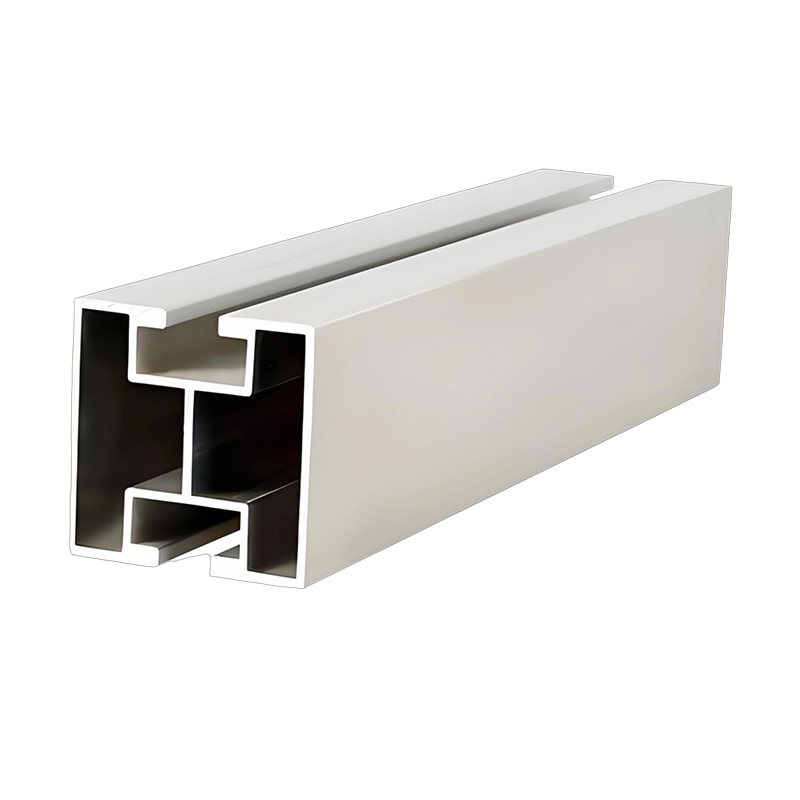
PV carports and BIPV systems: Mechanical locking between modules in PV carports and building-integrated PV roofs, requiring selection matched with rail profiles such as aluminum alloy rails and zinc-aluminum-magnesium C-section steel.
High-wind-pressure and large-module projects: In wind-prone areas or projects using large modules, extended and thickened mid clamps should be selected together with anti-loosening bolts to maintain preload under long-term vibration.
Trackers and flexible mounting systems: For connections at tracker edges and between internal modules, mid clamps need sufficient clamping rigidity to withstand continuous small-amplitude vibration.