Product Specifications
| Material | Carbon Steel |
Product Introduction
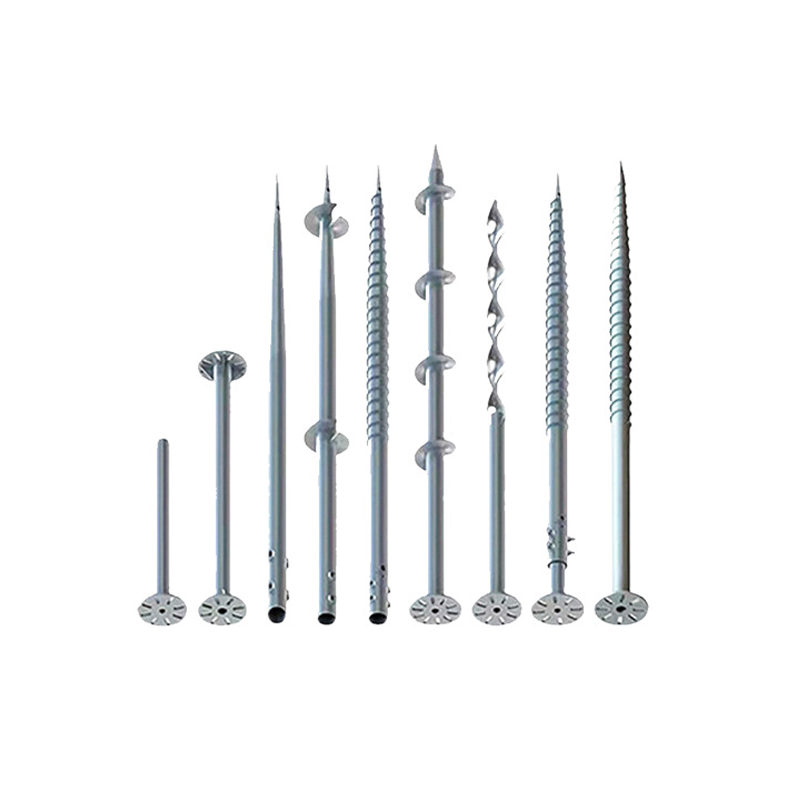
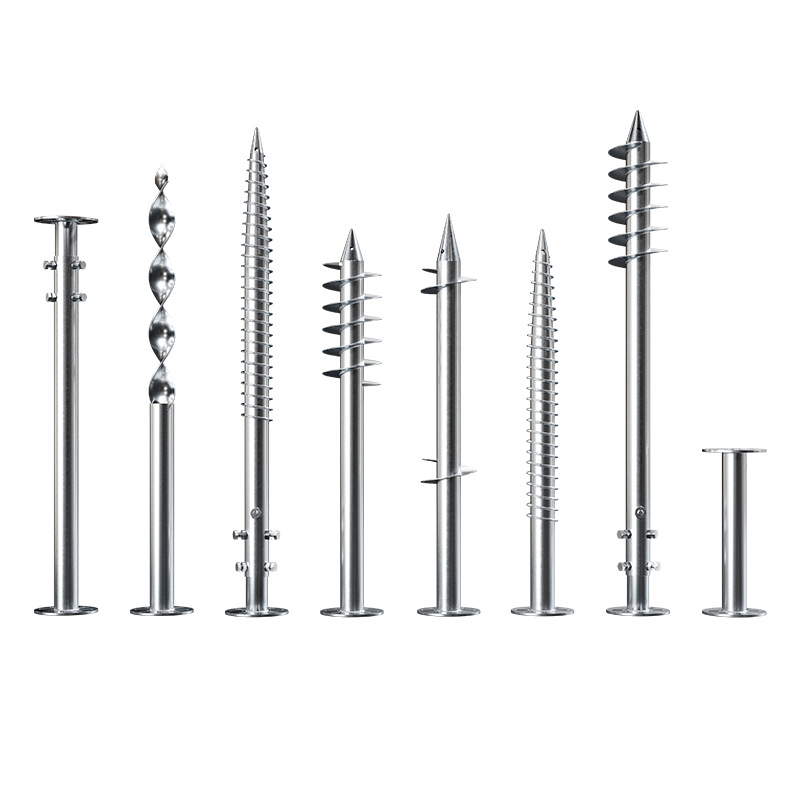
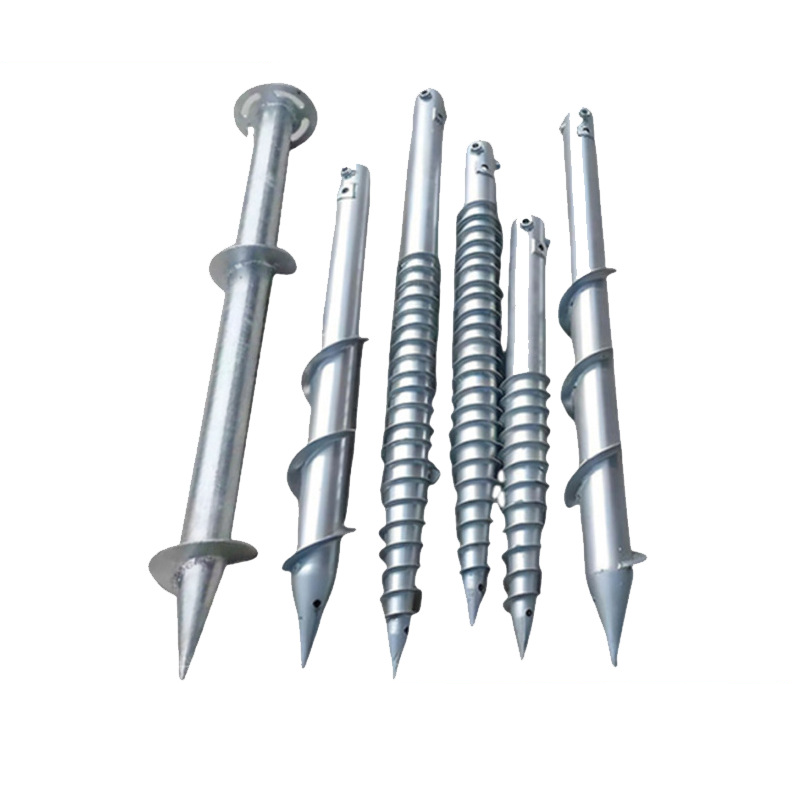
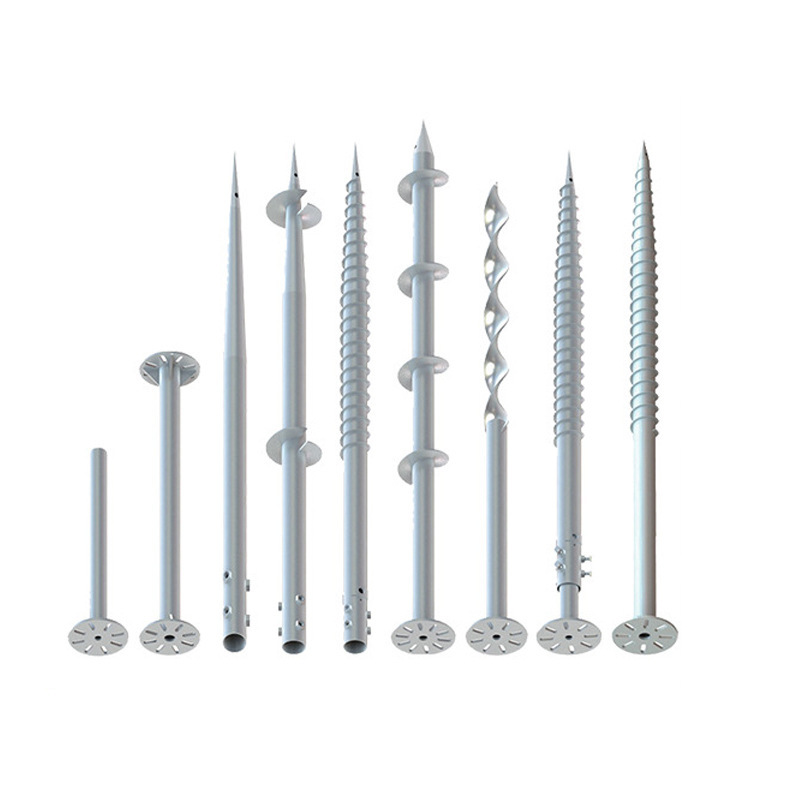
A helical ground screw (also known as a ground screw, ground anchor steel pile, or helical anchor) is a factory-prefabricated steel pile consisting of a metal tubular shaft, welded helical blades, and a top connection flange. It is rotated into the soil using specialized equipment, and relies on the mechanical interlock between the helical blades and the soil to provide compressive and uplift bearing capacity. Unlike cast-in-place bored piles, which involve "drilling first, then pouring," helical ground screws are "factory-formed and mechanically rotated in." This gives them outstanding advantages in construction speed, environmental performance, and recyclability, though they are clearly constrained by geological conditions.
I. Product Features
Standardized construction, primarily carbon structural steel
The shaft is commonly made of Q235B or Q355B, with common diameters of 48–273 mm and pile lengths up to 6000 mm. The blade diameter, pitch, and number can be adjusted according to soil friction and uplift requirements. The surface is usually hot-dip galvanized with a zinc coating thickness of ≥65 μm, providing a corrosion resistance life of approximately 25 years in normal environments.
Installation by "rotation," no wet work
No excavation, concrete pouring, curing, or mud slurry wall protection is required. A dedicated pile driver rotates and presses the pile into the ground, with the conical tip helping to penetrate harder strata. The foundation can be put into service immediately after installation.
Load-bearing mechanism centered on blade-soil interlock
Bearing capacity comes from the combined action of shaft side friction and blade end bearing, which differs from the concrete-soil interface friction of bored piles or the driving densification of precast piles. Performance is highly dependent on soil density and the effective interlock area of the blades; blade parameters must be matched to the geological report during design.
II. Product Advantages
Fast construction, no curing waiting period
Rotating in a 6 m helical pile takes about 8–12 minutes, and a single machine can complete 35–45 piles per day, far faster than the multiple steps of drilling, cage installation, pouring, and curing for bored piles. This is a clear advantage for projects with tight schedules and limited weather windows.
No wet work, minimal site disturbance
No mud slurry is generated and no curing water is discharged, reducing the need for concrete mixer and pump truck mobilization. In deserts, water areas, ecologically sensitive zones, and sites with dense existing facilities, disturbance and cleanup costs are lower.
Recyclable and reusable, competitive whole-life cost
At project completion or when site use changes, the piles can be rotated out and recovered, then inspected, treated, and reused. The material cost per pile may be 20%–30% higher than cement piles, but when construction efficiency, labor savings, and land reclamation costs are considered, overall project cost can be reduced by 8%–12%.
Good terrain adaptability and directional adjustability
The top flange can connect to upper support systems, allowing directional fine-tuning according to terrain in applications such as photovoltaics, adapting to undulating ground. In sand and soft soil, grip is generally better than that of conventional inclined ground piles.
III. Application Scope
By geological conditions:
Suitable for cohesive soil, silt, dense sand below moderately weathered rock, as well as desert sand layers, Gobi gravel, and similar strata. In soft sandy soil, the helical blades interlock well with the soil, and desert photovoltaic projects often list helical piles as one of the preferred foundation types.
However, the boundaries are clear:
-
Hard rock or shallow bedrock: the helical pile shaft is relatively slender and the rotary downward pressure is limited, so it cannot directly penetrate bedrock and requires pre-drilling; when bedrock is very shallow, the blades cannot obtain sufficient soil interlock, and the solution is basically unfeasible.
-
Strata with large boulders, cobbles, or old foundation obstacles: difficult to bypass or penetrate, prone to deviation or failure to reach design depth.
-
Deep soft soil with high horizontal bearing capacity requirements: the pile shaft cross-section is relatively small, horizontal bearing capacity may be low, requiring careful verification or adoption of other pile types.
By project type:
-
Photovoltaic power station support foundations: ground-mounted plants, desert plants, mountainous photovoltaics, fishery-solar hybrids, etc. — currently the largest and most mature application scenario;
-
Light and medium-sized buildings and facilities: wooden villas, prefabricated temporary housing, agricultural greenhouses, fences and guardrails, billboards, bus shelters, etc.;
-
Communication and power facilities: 5G communication towers, transmission line towers, auxiliary foundations for wind power projects, etc.;
-
Projects requiring recyclability or temporary use: temporary venues, storage facilities, and sites where land use may change and foundations are required to be removable and recoverable.