Wohe Research · Article revision V1
Bolted joints for circular use: does a demountable structure mean its bolts can be reused?
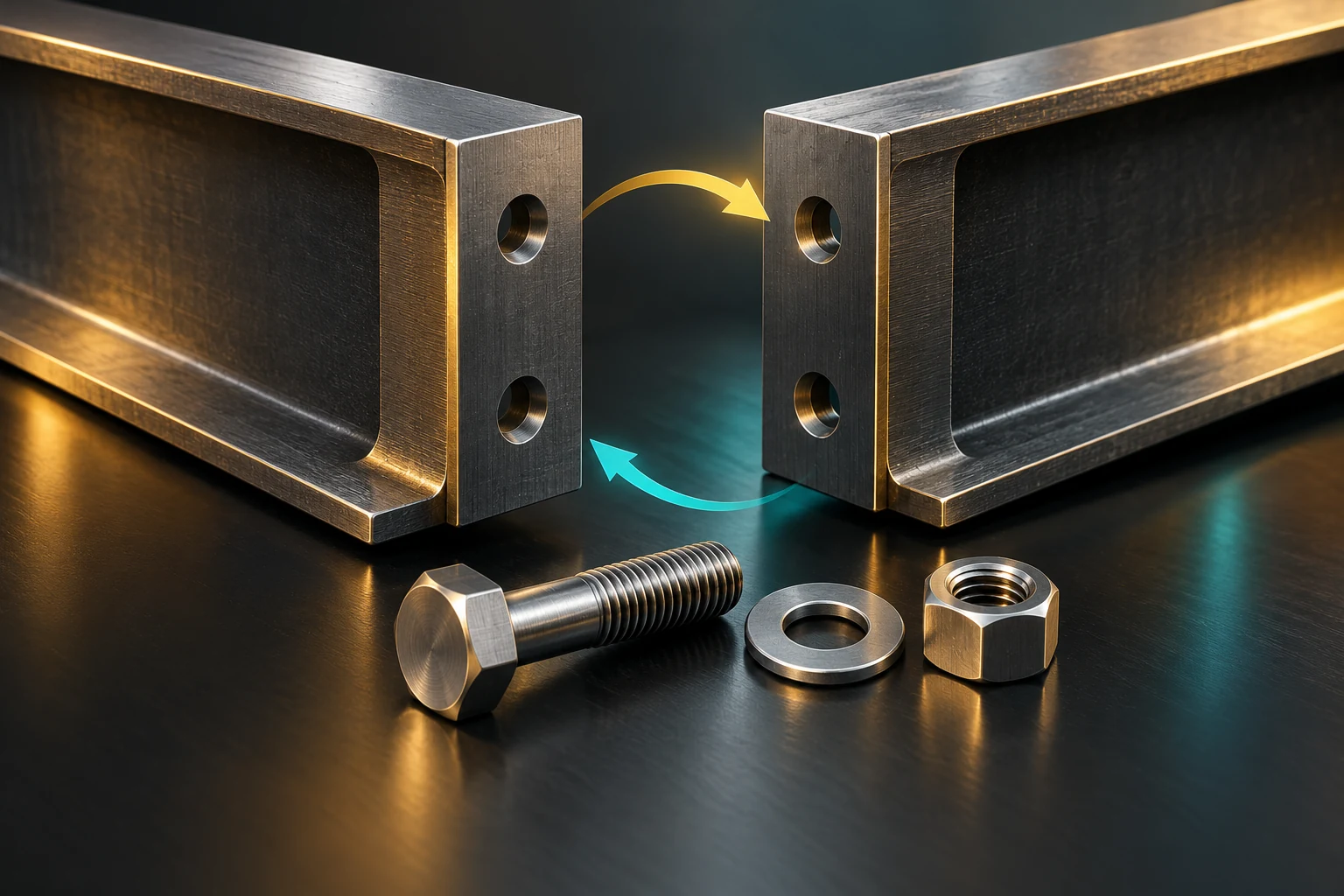
At a glance
Drawing on tests of demountable steel structures, Wohe Research distinguishes joint disassembly, component reuse and fastener reuse, and proposes directions for maintenance records and reassembly validation.
Research question
How should joint demountability, component reuse and fastener reuse each be validated?
Guidance & practice
Research observation / proposed research topic
This article interprets publicly available literature as of 2026-10-16. Wohe's research proposals are suggested directions; they do not represent approved projects, completed tests or developed products.
Demountable joints offer research opportunities for structural maintenance, component replacement and material reuse. However, whether a structure can be taken apart and whether its original bolts can remain in use are separate questions requiring separate assessments.
Hebei Wohe Fastener Manufacturing Co., Ltd. follows connection design for circular use and discusses research questions concerning fasteners during disassembly, reassessment and reassembly.
Recent research examines reuse of connection systems
A steel-frame study published in 2025 designed a demountable system using bolted and pinned connections and assessed its behavior through full-scale cyclic loading and reassembly. It concerned a particular structural configuration and demonstrated the role of connection design in disassembly, reassembly and component reuse. Research source: tests on demountable, reusable steel frames with bolted and pinned connections
Another long-term exposure study examined connection off-torque and tested reassembled joints using reclaimed steel plates and new bolts. This detail shows why research on component reuse cannot automatically be interpreted as validation of old-bolt reuse. Research source: off-torque and long-term behavior in structural disassembly and reuse
Which three questions need separate study?
| Subject | Core question |
|---|---|
| Connection system | Is disassembly straightforward and can the process be controlled? |
| Connected components | Can they meet reuse requirements after disassembly? |
| Fasteners | Is reuse permitted, and how should it be assessed? |
Conclusions at these three levels cannot replace one another.
An easily demounted connection system does not mean that hole surfaces, contact surfaces or fasteners are undamaged. Permission for reuse must be assessed separately against applicable requirements and inspection results.
Wohe's proposed research direction
One starting point could be a demountability assessment that records assembly, environmental exposure, disassembly and reassessment for one fixed joint configuration.
Possible observation items include:
- Conditions required for disassembly and operational access.
- Condition of threads and bearing surfaces.
- Damage and deformation of the connected components.
- Retention of product identity and historical records.
- Whether the joint meets reassembly requirements after replacement with new fasteners.
At the initial research stage, separate topics could address “component reuse after replacement with new fasteners” and “reuse of the original fasteners” to avoid mixing assessment objectives.
What other data does circular use require?
Wohe considers that traceable maintenance records for joints could be explored, retaining initial assembly information, reasons for disassembly, service environment and reassessment results.
Such records should show more than how many times something has been used. They should explain what happened, the basis for inspection and who ultimately confirmed the disposition.
For fasteners without historical records, normal appearance alone does not establish continued conformity with the original requirements.
Looking ahead: from component reuse to maintainable connection design
Circular use may encourage the fastener industry to participate earlier in connection-design discussions: for example, providing disassembly access, defining replacement requirements and keeping product identity traceable throughout maintenance.
These are directions worth exploring, with actual effects still requiring validation for the specific system. Waste- or carbon-reduction outcomes also need defined assessment scopes and data; using bolted joints alone does not justify quantified promises.
Future connection design could consider installation, service, disassembly and reassembly together. Wohe's research interest is in providing clear requirements and verification criteria at every stage.
Methods, conditions and evidence
Public literature interpretation and engineering-question analysis are used to propose future validation directions. No Wohe in-house tests have been conducted or reported. The cited findings apply to the conditions of the original papers and cannot be directly extrapolated into product conclusions.
Findings
This page presents research observations and proposed topics. It does not mean that Wohe has approved a project, completed tests, deployed a system or developed a product. Actual engineering applicability still requires independent validation.
Scope and limitations
This article does not establish joint safety, product certification or suitability for a particular application. The research proposals do not mean that projects have been approved or validation completed. Findings from individual publications must not be used directly to set on-site torque, lubrication, reuse counts or disposition of critical joints. Actual applications should be assessed by appropriate technical personnel against the design, applicable specifications and confirmed inspection conditions.
Evidence and sources
Based on research-observation manuscripts supplied by the website owner, with all original literature links retained in the body. The manuscripts state a literature-search cutoff of 2026-10-16. For this publication, relevant publication details and publicly accessible abstracts or indexed excerpts were editorially checked; this was not a full-text review of every paper, and no Wohe on-site tests were conducted. The cited research findings belong to the original paper authors; the future proposals in this article are suggested directions.
Source document ↗https://www.sciencedirect.com/science/article/pii/S0141029625019820Check the issuing organization for the full document and its latest status.
Article revision V1
First publication of research observations and proposed topics based on manuscripts supplied by the owner, using AI-assisted translation and conceptual illustrations.
You are reading the published revision. Later drafts are reviewed before they replace this page.